Astrophotography with a smart telescope: what the stacking does
Traditional astrophotography means a mount, a camera, a laptop and a long apprenticeship. A smart telescope folds all of it into one box, and the spec sheet tells you how much of the old control it hands back.
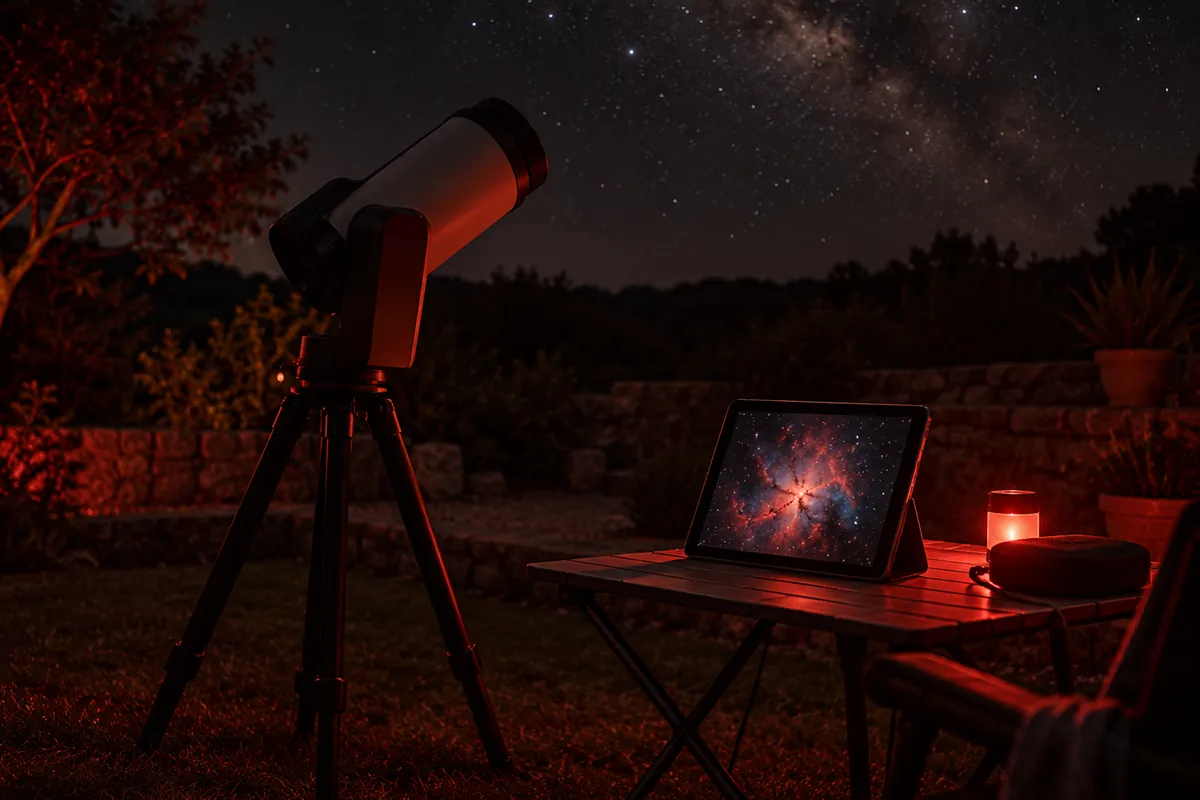
What stacking does, step by step
- The telescope takes a short exposure, usually seconds long, so that the stars do not trail on a simple mount.
- It measures the stars in that frame and aligns it with the frames before.
- It adds the aligned frames together. The faint signal from a nebula grows with each one; the random noise grows more slowly.
- It throws out frames spoilt by a passing aircraft, a gust or a wisp of cloud.
- It stretches the result so that the faint parts become visible, and sends a preview to your phone.
The practical consequence is that time matters as much as aperture. Twice the total exposure gives a noticeably smoother image, which is why battery life and the ability to return to a target on another night feature on this list.
Exposure length and the mount
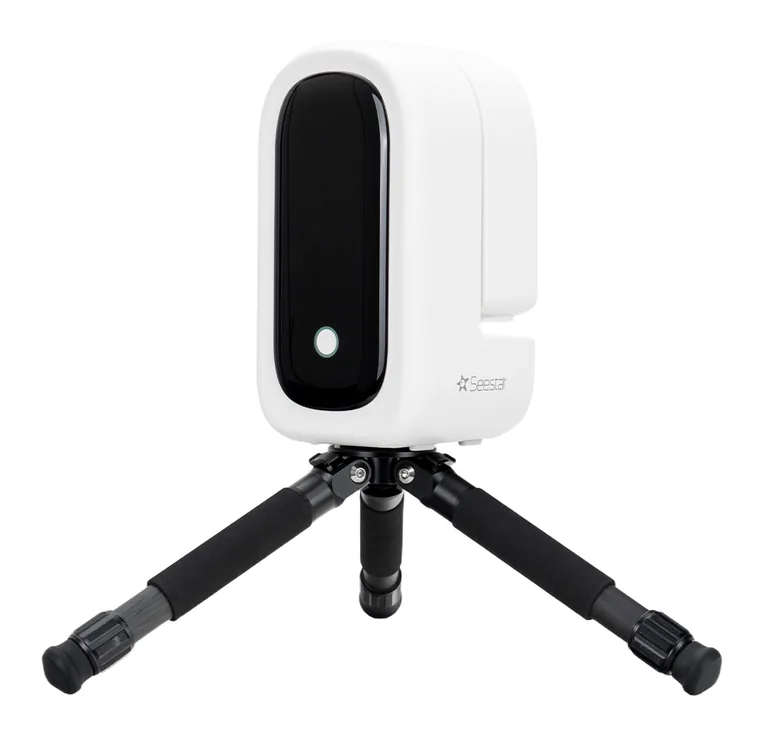
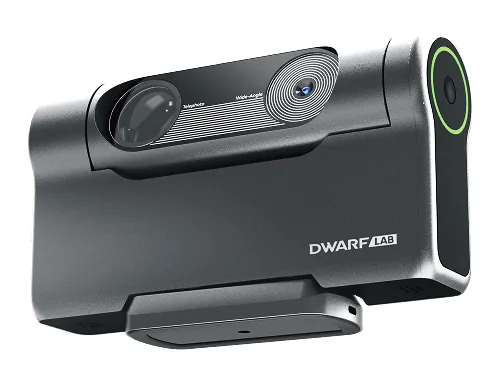
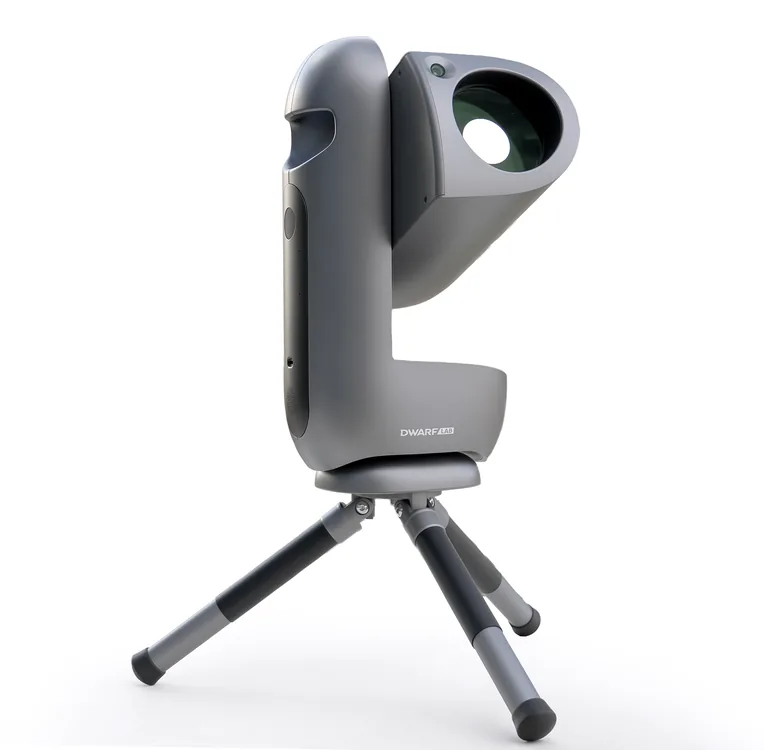
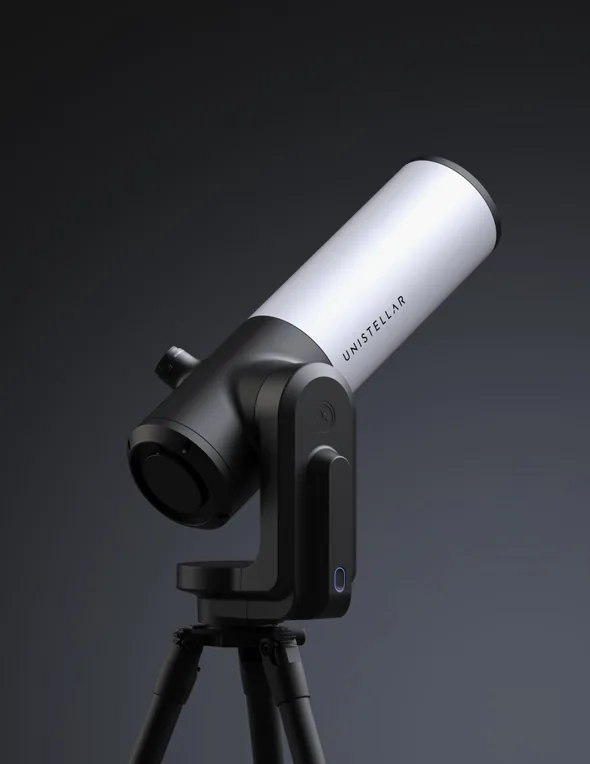
On an alt-azimuth mount, which moves up and across, the field slowly rotates during a long exposure, so frames stay short. An equatorial mode, where the mount is tilted towards the celestial pole, removes that rotation and allows longer frames. ZWO offers it on the Seestar S50 Pro. DwarfLab offers it on the Dwarf 3 with exposures up to 60 seconds, and on the DwarfLab Draco, whose exposure range runs from 1/10000 s to 300 s with built-in guiding. The Unistellar eVscope 2 and the Celestron Origin Mark II stay alt-azimuth by their makers' specifications.
Files you can take away
For anyone who wants to process images on a computer later, the file format decides how much information survives. A JPEG is fine for sharing, but it keeps only eight bits per channel and has already been stretched. The raw formats keep far more.
ZWO adds a useful note: of the S50 Pro's 128 GB, about 100 GB is free once the system has taken its share.
Several nights on one target
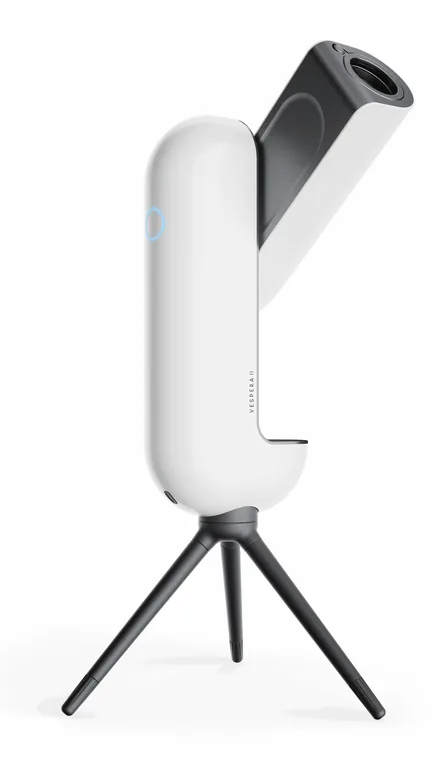
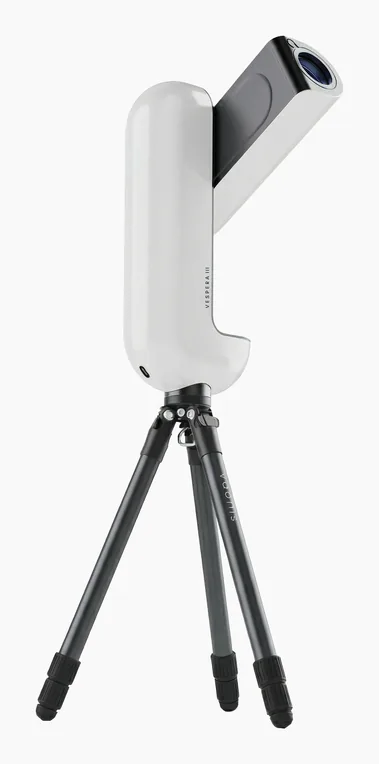
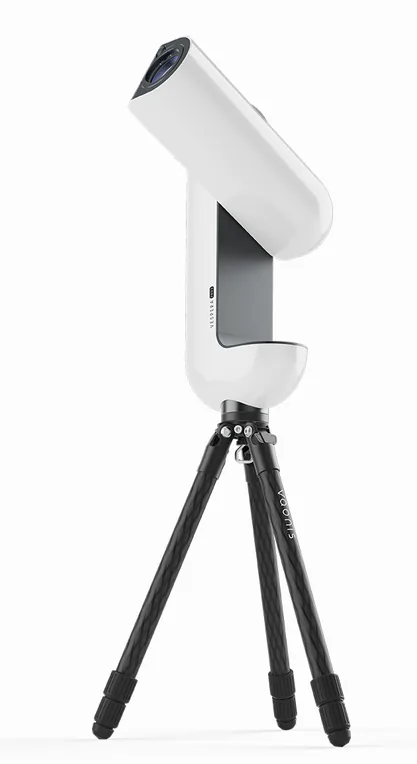
A British winter rarely gives two clear nights in a row, let alone five. Vaonis addresses that directly: the Vespera III keeps 15 multi-night slots and the Vespera Pro II 30, so that frames gathered on separate evenings add into one image. That is the most practical feature for a UK sky on this list, and it is one reason the two models reach Good seeing despite their 50 mm lenses. The Vespera II does not list it.
Mosaics for large targets
Vaonis's CovalENS mode stitches several frames into one wider view. The maker quotes a maximum field of 4.33° by 2.43° for the Vespera II and III, against a native 2.5° by 1.4°, and 4.18° by 2.45° for the Vespera Pro II. The trade is time: each panel needs its own share of the night.
Sensor and pixel figures
A few makers publish more about the sensor than its name. For the Dwarf 3, DwarfLab lists a read noise of 0.6 electrons, a quantum efficiency of 83 percent and a 12-bit output. Vaonis gives a resolution of 2.39 arcseconds per pixel for the Vespera II and 1.6 for the Vespera Pro II; Celestron gives 1.23 for the Origin. The smaller the figure, the finer the detail each pixel records, provided the air is steady enough to deliver it.
What stays out of reach
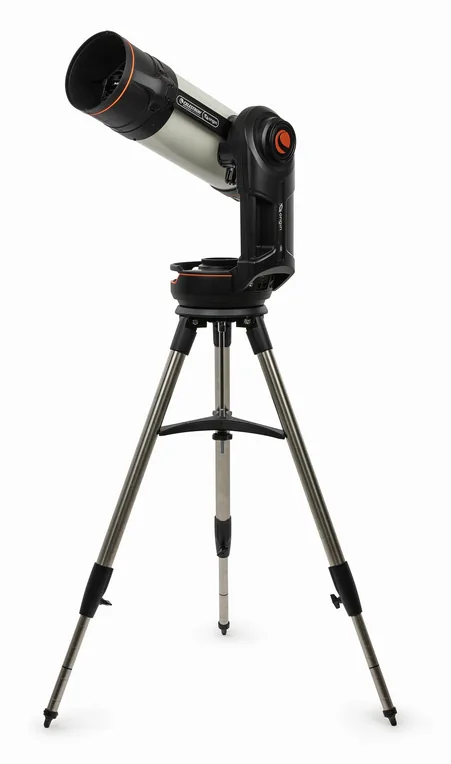
A smart telescope does not replace a cooled camera on a large mount. The sensors here are uncooled, the apertures modest, and the processing chain partly closed. What it does offer is a usable image on the first clear evening and a raw file for the evenings you want to go further. The Celestron Origin Mark II is the model on this list that leans furthest towards the traditional route, with a filter drawer for standard astronomy filters, 152 mm at f/2.2, and raw files on a USB port.
Dew, the quiet thief
On a still, clear British night, dew forms on any cold glass within an hour or two, and a fogged front lens ends a session as surely as cloud. Vaonis lists a dew heater on the Vespera III and the Vespera Pro II; Celestron heats the Origin's front lens automatically and adds a removable dew shield. The other makers do not list one in the specifications read for this site, so a band heater or a simple shield is worth budgeting for if you plan long sessions.
A short checklist
- Want to edit your images later? Look for FITS or raw output.
- Cloudy climate? Multi-night stacking is worth more than a few millimetres of aperture.
- Large nebulae? Field or a mosaic mode first.
- Long sessions? Battery, storage and a dew heater on the spec sheet.
The models in this field note
-
50 mm, 5 kg, 2.5° × 1.4°
Thin cloud5.4 / 10
from £1,398Typical UK retail price, 23 October 2026
See it at Vaonis -
50 mm, 5 kg, 2.5° × 1.4°
Good seeing6 / 10
£2,199Typical UK retail price, 23 October 2026
See it at Vaonis -
50 mm, 5 kg, 1.6° × 1.6°
Good seeing5.9 / 10
from £2,599Typical UK retail price, 23 October 2026
See it at Vaonis -
152 mm, 18.87 kg, 1.32° × 0.75°
Good seeing6.3 / 10
from £3,699Typical UK retail price, 23 October 2026
See it at Celestron -
50 mm, 2.8 kg, Tele: 2.8° (Portrait); Wide: 63° (Portrait)
Good seeing6.4 / 10
£999Typical UK retail price, 23 October 2026
See it at Seestar (ZWO) -
35 mm, 1.35 kg, 3°
Clear night6.7 / 10
from £459Typical UK retail price, 23 October 2026
See it at DwarfLab -
90 mm, 5.5 kg
from £1,349Typical UK retail price, 23 October 2026
See it at DwarfLab -
114 mm, 7 kg, 0.76° × 0.57°
Thin cloud5.1 / 10
£4,199Price at Unistellar's UK shop, 23 October 2026
See the price at Unistellar