Planets with a smart telescope: why focal length decides
Smart telescopes are built for nebulae, which are large and faint. Planets are the opposite: small and bright. The spec that decides how a planet looks is not aperture alone but how many arcseconds land on each pixel.
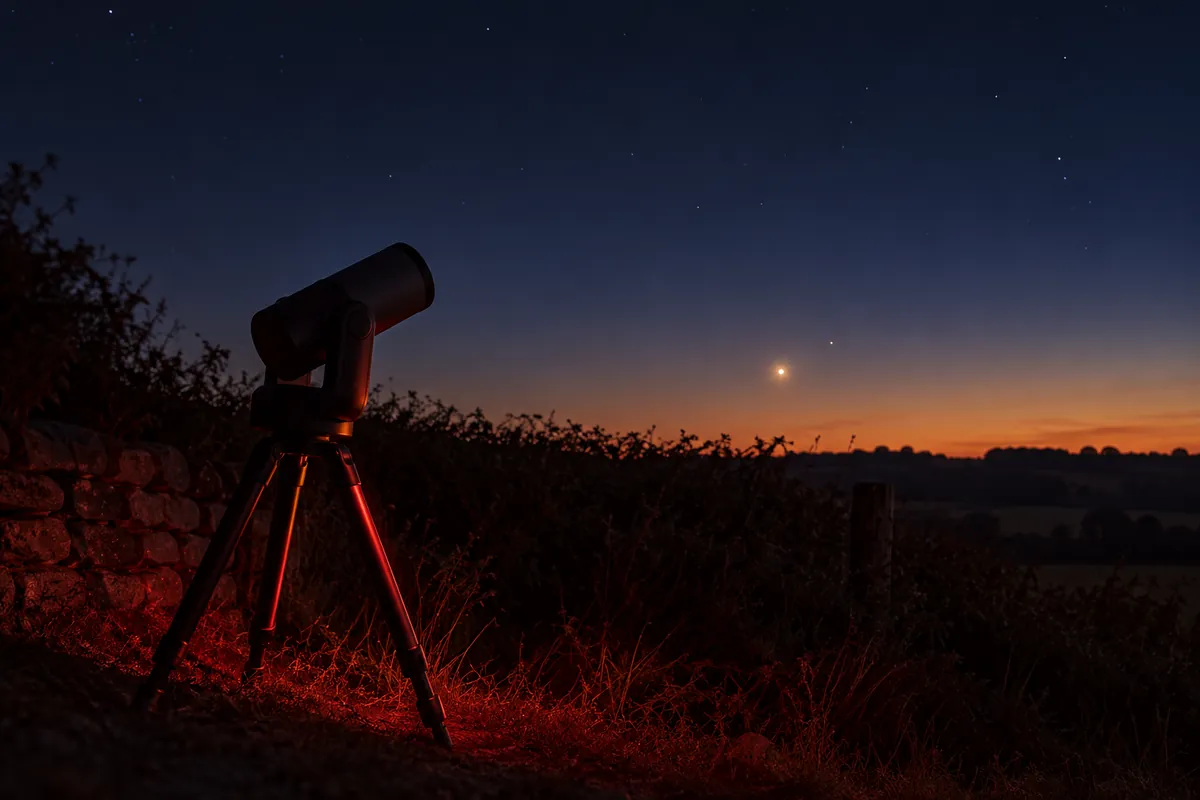
Small targets need image scale
Jupiter spans around 40 to 50 arcseconds at its best, Saturn's disc under 20 with the rings about twice that, Mars less still. A telescope's focal length and its sensor's pixel size set the image scale, the patch of sky each pixel covers. Divide the planet's size by that patch and you have the planet's width in pixels. Long focal lengths and small pixels make it larger; aperture then decides whether there is fine detail to fill those pixels.
What the detail score measures
The detail score on this site takes the coarser of two limits: the resolving power of the aperture (the Dawes limit, 116 divided by the aperture in millimetres, in arcseconds) and the sampling of the sensor (two pixels' worth of sky). A 1.2 arcsecond result scores 10, a 12 arcsecond one scores 0. It is empty when the maker leaves out the pixel size or the true focal length, which is the case for the Dwarf models and the Seestar S30 Pro.
Why the Unistellar models lead here
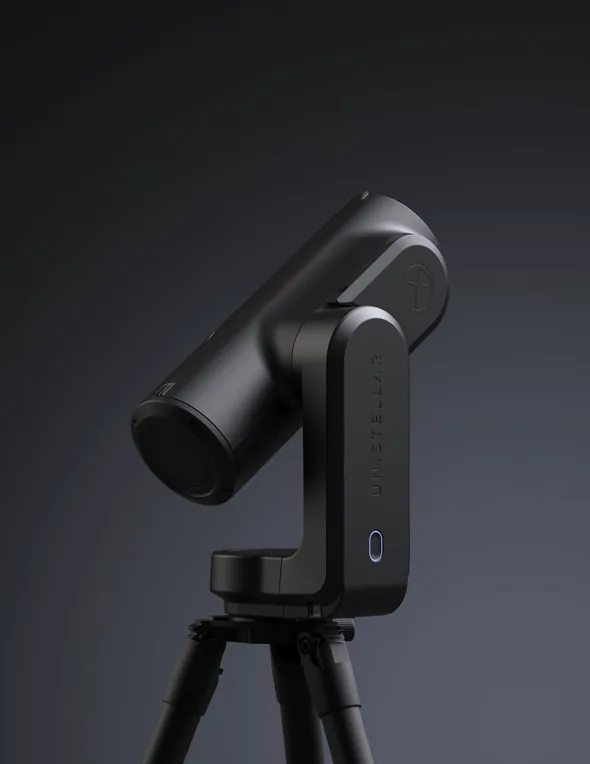
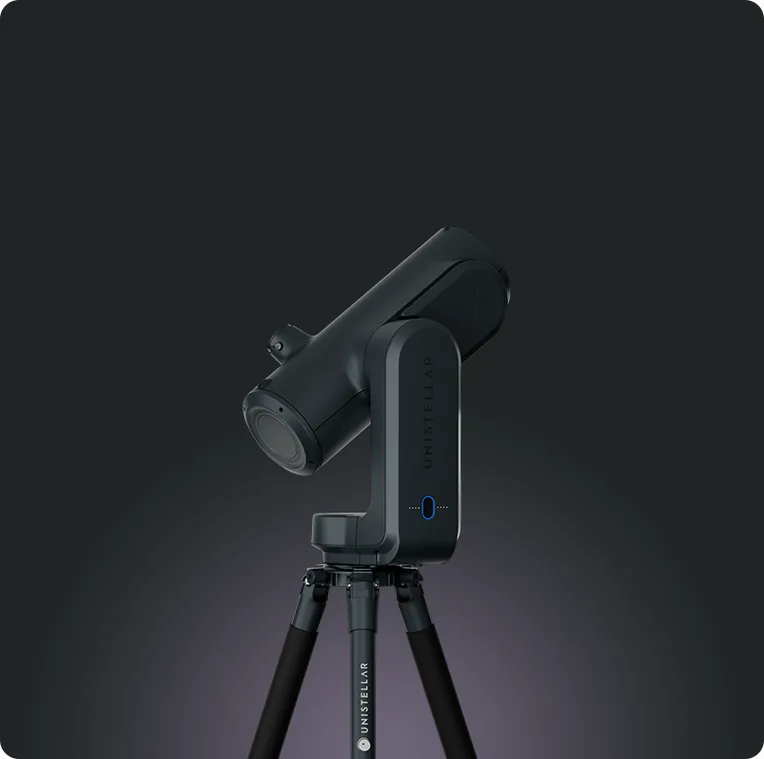
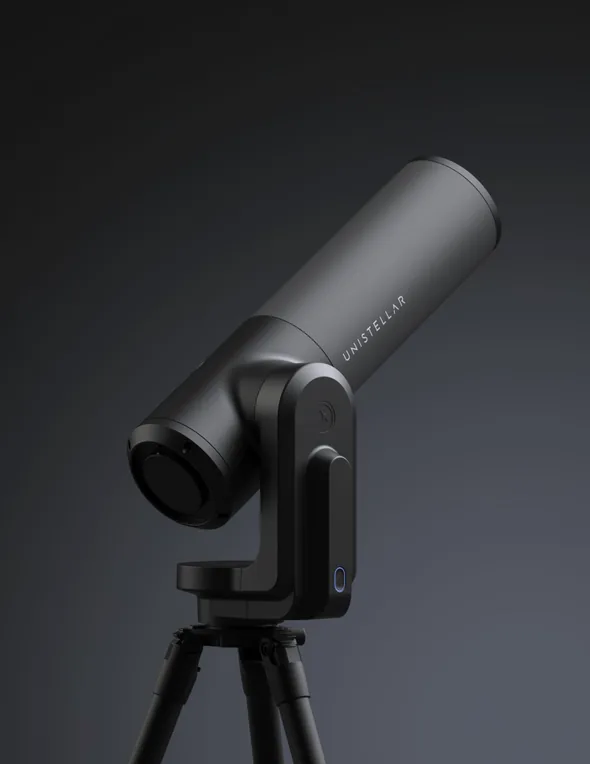
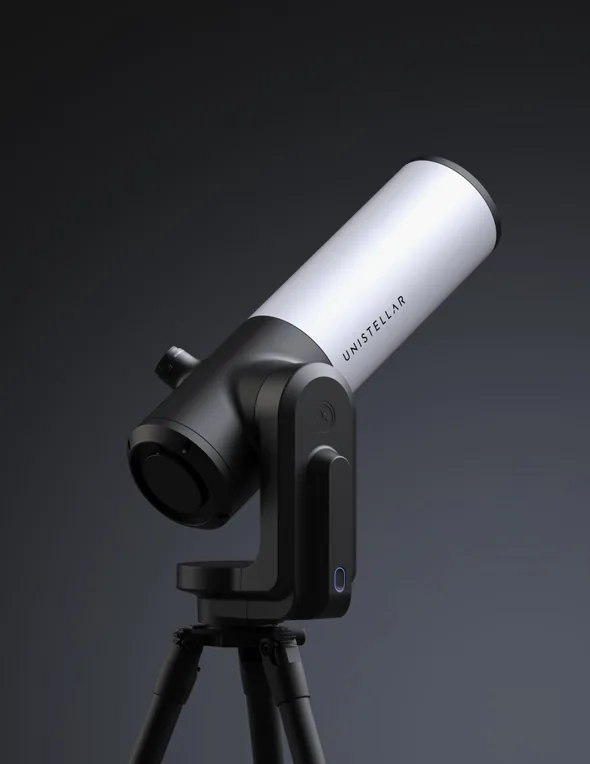
The Unistellar reflectors combine the longest focal lengths of the compact smart telescopes with sizeable mirrors. The Odyssey pair score highest because their 1.45 µm pixels sample the sky finely at 320 mm. The eQuinox 2 and eVscope 2 have the longest focal length on the list, 450 mm, and the larger 114 mm mirror, but coarser 2.9 µm pixels, so they land at 6.5. This is the area where Unistellar's narrow field turns from a weakness into an advantage: a field under one degree, which crops large nebulae, simply puts more pixels on a small planet.
The Origin's case
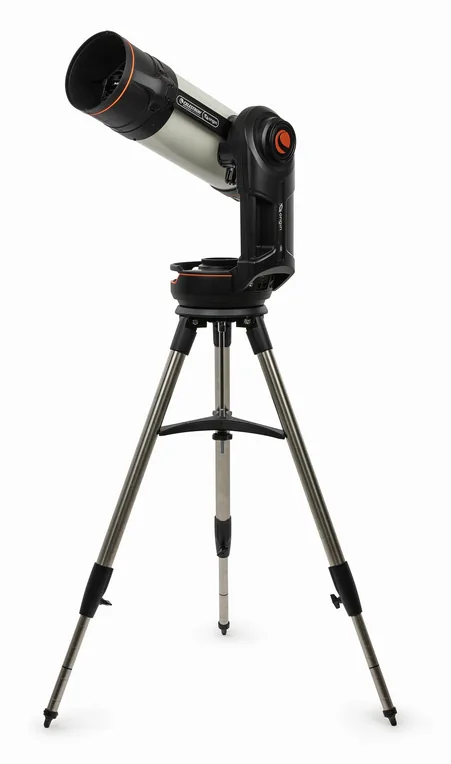
The Celestron Origin Mark II has the most aperture here, 152 mm, but a short 335 mm focal length, chosen for fast deep-sky imaging at f/2.2. Celestron gives its image scale as 1.23 arcseconds per pixel. That is fine sampling for nebulae and galaxies, and decent for planets, though the design was not drawn up with them in mind.
The small refractors
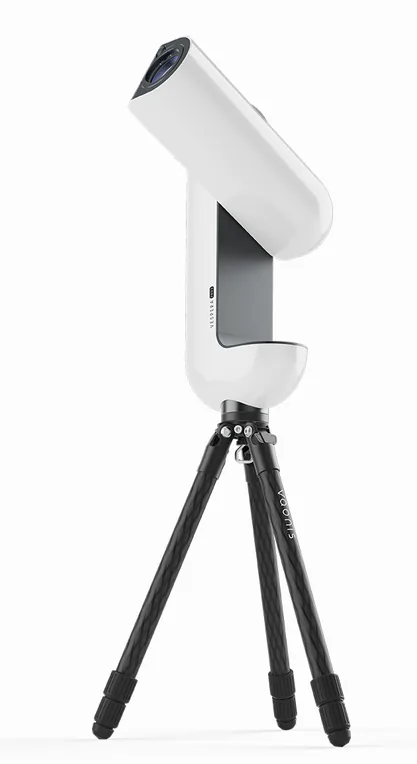
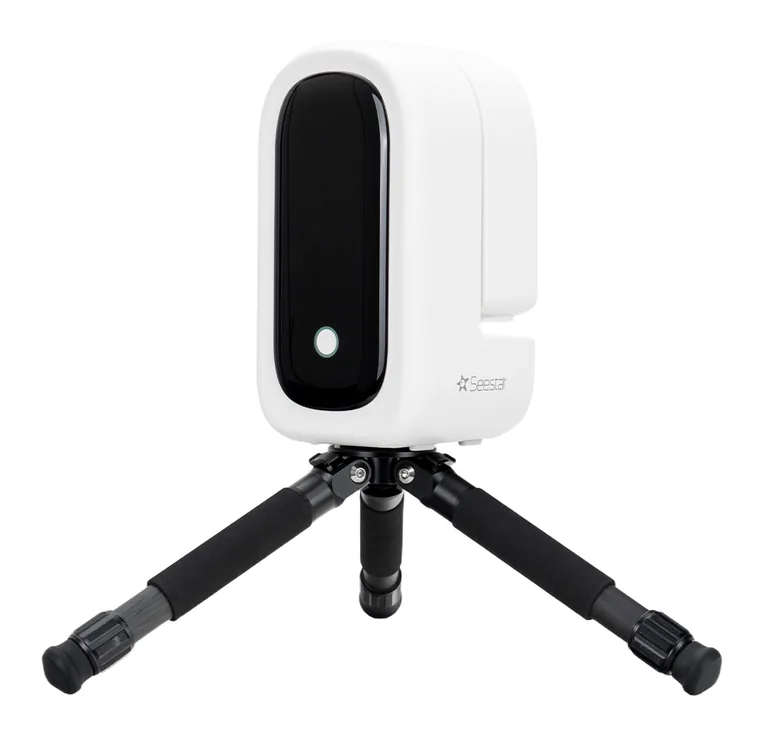
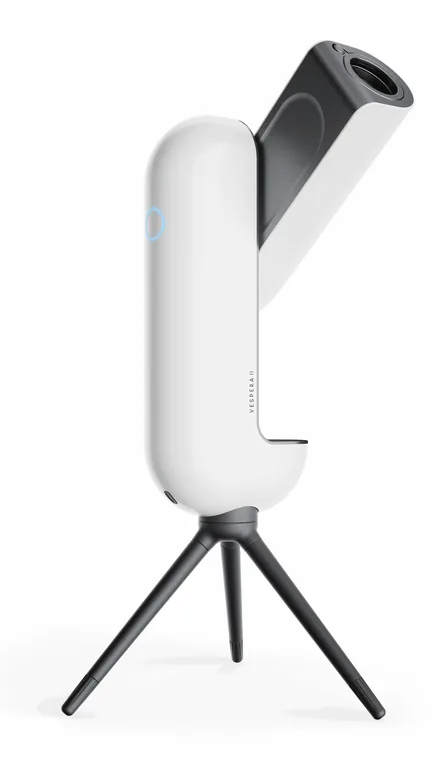
At 245 to 260 mm and 2.9 µm pixels, the Seestar S50 Pro and the Vespera II and III record Jupiter as a disc around twenty pixels wide. The belts and the larger moons show; finer detail does not. Vaonis's 2 µm pixels on the Vespera Pro II improve that to 1.6 arcseconds per pixel by the maker's figure. None of these is a planetary instrument, and the spec sheets make no secret of it.
Video and very short exposures
Planetary imagers on conventional telescopes record video and keep only the sharpest frames. Few smart telescopes say much about this. ZWO lists MP4 and AVI video for the S50 Pro and the S30 Pro. DwarfLab gives the Draco an exposure range starting at 1/10000 s, short enough for the Moon and the bright planets. Unistellar and Vaonis publish no video formats in the specifications read for this site, so the tables here leave them blank rather than guess.
Steady air counts as much as the scope
Planets are bright enough for very short exposures, and sharp planetary images come from catching the moments when the air is still. In Britain that often means a night under high pressure, with the planet well above the rooftops and away from warm chimneys. A planet low over a neighbour's roof shimmers whatever the telescope.
The Moon, and solar filters
The full Moon spans about half a degree. It fits comfortably in the Seestar and Vespera fields and only just in the Unistellar ones, whose short side is a little over half a degree. ZWO lists a magnetic solar filter as an external accessory for the Seestar Pro models, and DwarfLab packs a magnetic ND solar filter with the Dwarf 3. Observing the Sun requires the maker's solar filter.
If planets come first
- Look at the detail score and the focal length before the aperture.
- Plan around the planets' seasons: each one is well placed for only part of the year, and from Britain the low ones never climb far above the rooftops.
- The Odyssey and Odyssey Pro lead on detail here; the eQuinox 2 and eVscope 2 add mirror area.
- For a mix of planets and wide nebulae, no single compact model does both well; the S50 Pro is the easiest compromise to carry.
The models in this field note
-
85 mm, 4 kg, 0.75° × 0.56°
Good seeing5.9 / 10
£2,099Price at Unistellar's UK shop, 23 October 2026
See the price at Unistellar -
85 mm, 4 kg, 0.75° × 0.56°
Good seeing5.9 / 10
from £3,699Price at Unistellar's UK shop, 23 October 2026
See the price at Unistellar -
114 mm, 7 kg, 0.76° × 0.57°
Thin cloud5.2 / 10
£2,299Price at Unistellar's UK shop, 23 October 2026
See the price at Unistellar -
114 mm, 7 kg, 0.76° × 0.57°
Thin cloud5.1 / 10
£4,199Price at Unistellar's UK shop, 23 October 2026
See the price at Unistellar -
152 mm, 18.87 kg, 1.32° × 0.75°
Good seeing6.3 / 10
from £3,699Typical UK retail price, 23 October 2026
See it at Celestron -
50 mm, 5 kg, 1.6° × 1.6°
Good seeing5.9 / 10
from £2,599Typical UK retail price, 23 October 2026
See it at Vaonis -
50 mm, 2.8 kg, Tele: 2.8° (Portrait); Wide: 63° (Portrait)
Good seeing6.4 / 10
£999Typical UK retail price, 23 October 2026
See it at Seestar (ZWO) -
50 mm, 5 kg, 2.5° × 1.4°
Thin cloud5.4 / 10
from £1,398Typical UK retail price, 23 October 2026
See it at Vaonis