A first telescope that finds things for you
A conventional first telescope asks you to learn the sky before it shows you anything. A smart telescope turns that round: it locates itself, points and stacks, and you learn the sky from what it brings back.
Why a smart telescope suits a beginner
The hard part of a first telescope is rarely the optics. It is the hour spent aligning a finder, the star charts read by red torch, and the faint smudge that turns out not to be the galaxy you wanted. A smart telescope removes most of that. It takes a picture of the sky, works out where it is pointing by matching the stars against a catalogue (plate solving), then moves to your chosen object and adds frame after frame into one cleaner image (live stacking). The phone or tablet becomes the eyepiece.
That does not make every model equally easy. The spec sheets differ on the things that decide whether a beginner keeps going: weight, battery, autofocus and how the telescope deals with town light.
Four questions before you choose
- Can you carry it out in one trip? Under 5 kg earns the For first nights label on this site; 3 kg and under earns Grab and go as well.
- Will it last the night? Battery life varies from four hours to eleven by the makers' own figures.
- Does it focus itself? Some makers state autofocus, others do not mention it.
- How bright is your sky? A built-in nebula filter helps from towns; galaxies need darkness or aperture.
The lightest place to start
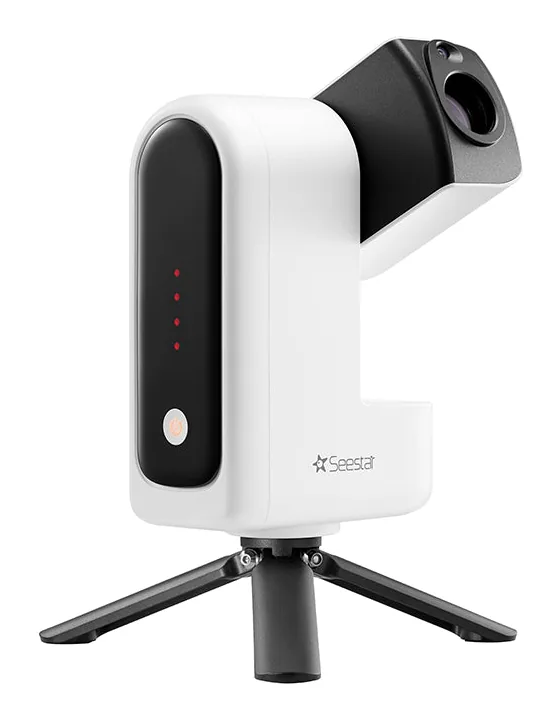
The Seestar S30 Pro weighs 1.65 kg, runs six hours on ZWO's figure and carries a dual-band filter. Its 4.6° field forgives a slightly off target and takes in large objects whole, which is helpful while you are still finding your bearings. It holds the Clear night verdict here.
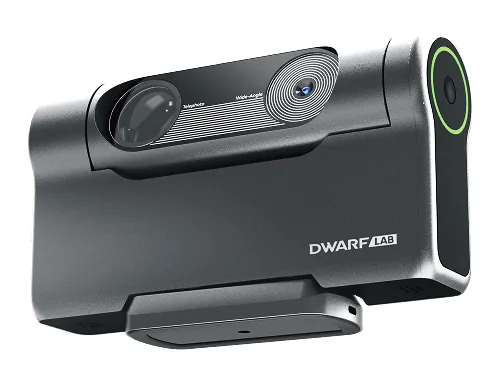
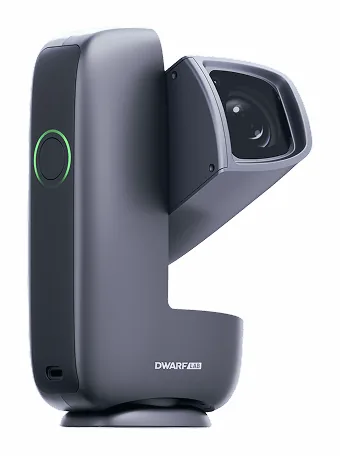
The Dwarf 3 is lighter still at about 1.35 kg, with a 3° field, five and a half hours of battery and IP54 sealing listed by DwarfLab. It shares the top verdict. The Dwarf mini goes down to 840 g, but DwarfLab leaves out its field and battery life, so it carries no verdict here.
A little more light
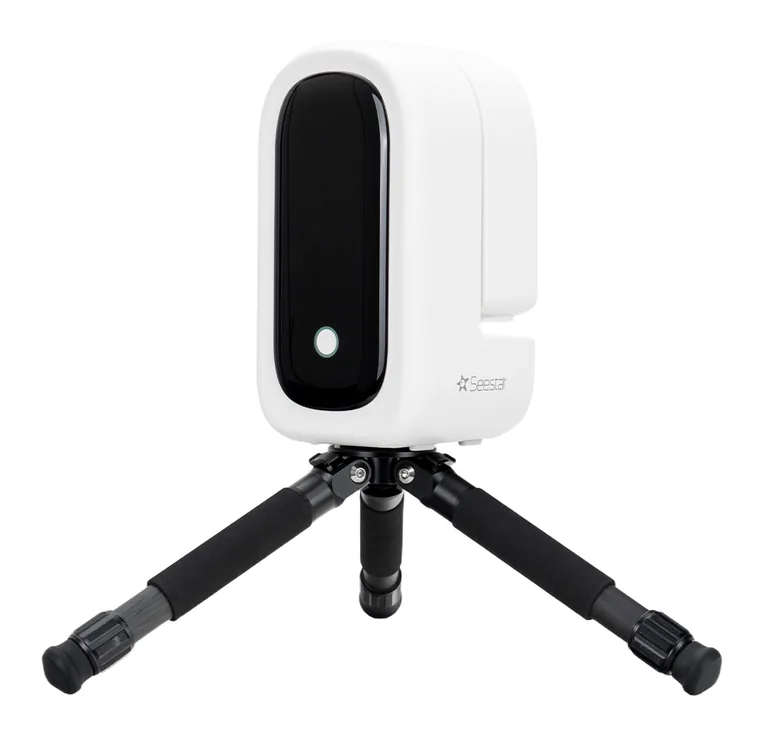
The Seestar S50 Pro adds 20 mm of aperture, nine hours of battery and 128 GB of storage at 2.8 kg. Its ease score of 9.5 comes from that battery and its filter; ZWO does not state autofocus in the specifications read here, so that part is simply left out of the score. For a beginner who wants the Orion Nebula and the Pleiades to fill the frame, it is a natural middle choice.
Larger, still beginner-friendly
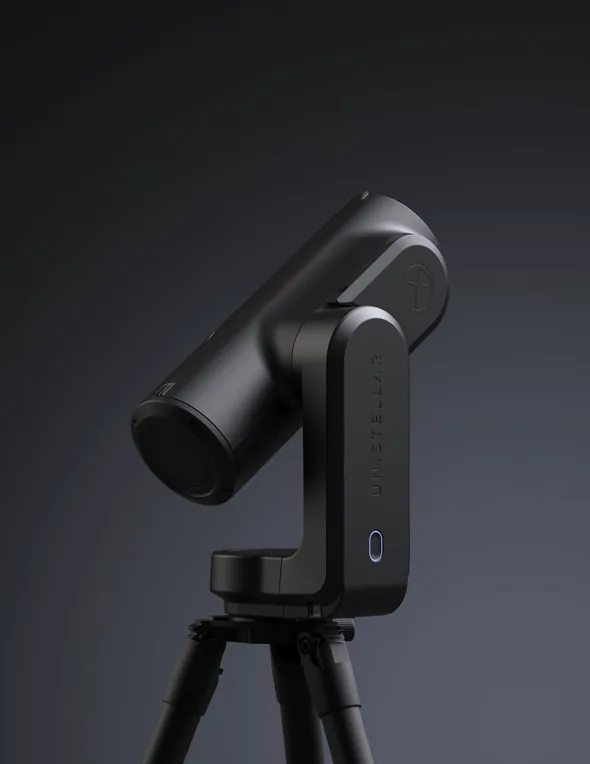
The Unistellar Odyssey is the lightest Unistellar telescope at 4 kg, with a 2.5 kg tripod alongside. Unistellar states autofocus for it, and its 85 mm mirror and fine pixels give a detail score of 8.1, the best listed here alongside the Odyssey Pro. The catch for a newcomer is the field: under a degree, so large nebulae overflow it, and the five-hour battery is shorter than most.
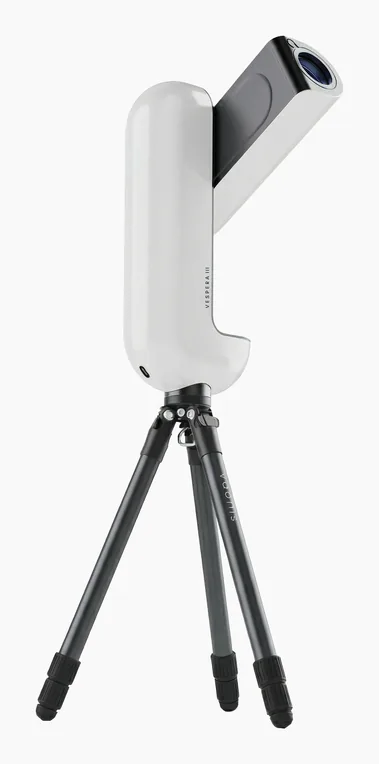
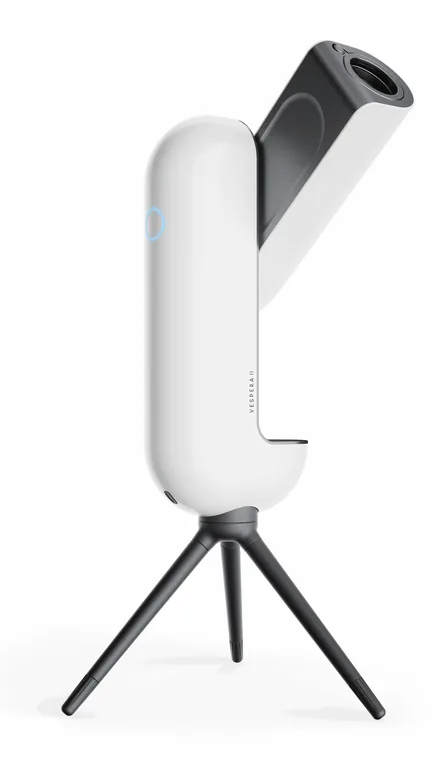
Vaonis's Vespera III weighs 5 kg, a touch over the first nights line, but packs eleven hours of battery and a dew heater, and its ease score is a full 10. The older Vespera II has autofocus but four hours of battery and no listed heater, which pulls it to Thin cloud.
Things nobody tells a beginner
- Let the telescope sit outside for a while before the first image; glass that is warmer than the air blurs stars.
- Level ground helps the mount, even when the maker says levelling is automatic.
- Dew arrives with clear, still nights; a heater or a dew shield keeps a session going.
- The Moon washes out faint objects for several nights either side of full; plan nebulae for the darker weeks.
- Keep the phone charged as well as the telescope; the app does the steering.
A first evening, step by step
- Charge the telescope and your phone during the day, and install the maker's app before dark.
- Set the tripod on firm, level ground with a clear view of the southern sky.
- Switch on and let the telescope locate itself from the stars; this takes a few minutes and needs a patch of clear sky.
- Pick a bright, easy target first: the Moon, the Pleiades or the Orion Nebula in winter, the Ring Nebula in summer.
- Let the image build for ten or fifteen minutes before judging it. Stacking needs time.
- Save the result, then try a fainter target once you know how the app behaves.
Northern summers are short of true darkness, so many beginners do best to start between autumn and spring, when the nights are long enough for several targets.
The short list for a first scope
For most first-time owners in a British town, the S30 Pro and the Dwarf 3 sit closest to the brief: light, filtered, with enough battery for an evening. With a darker garden and a firmer interest in galaxies, the Odyssey brings real aperture while staying under 5 kg. The full ranking by budget and sky places them against everything else listed.
The models in this field note
-
30 mm, 1.65 kg, Tele: 4.6°; Wide: 63°
Clear night6.9 / 10
£649Typical UK retail price, 23 October 2026
See it at Seestar (ZWO) -
50 mm, 2.8 kg, Tele: 2.8° (Portrait); Wide: 63° (Portrait)
Good seeing6.4 / 10
£999Typical UK retail price, 23 October 2026
See it at Seestar (ZWO) -
35 mm, 1.35 kg, 3°
Clear night6.7 / 10
from £459Typical UK retail price, 23 October 2026
See it at DwarfLab -
85 mm, 4 kg, 0.75° × 0.56°
Good seeing5.9 / 10
£2,099Price at Unistellar's UK shop, 23 October 2026
See the price at Unistellar -
50 mm, 5 kg, 2.5° × 1.4°
Good seeing6 / 10
£2,199Typical UK retail price, 23 October 2026
See it at Vaonis -
50 mm, 5 kg, 2.5° × 1.4°
Thin cloud5.4 / 10
from £1,398Typical UK retail price, 23 October 2026
See it at Vaonis -
30 mm, 0.84 kg
from £399Typical UK retail price, 23 October 2026
See it at DwarfLab