Celestron Origin Mark II or Odyssey Pro: home observatory or carry case
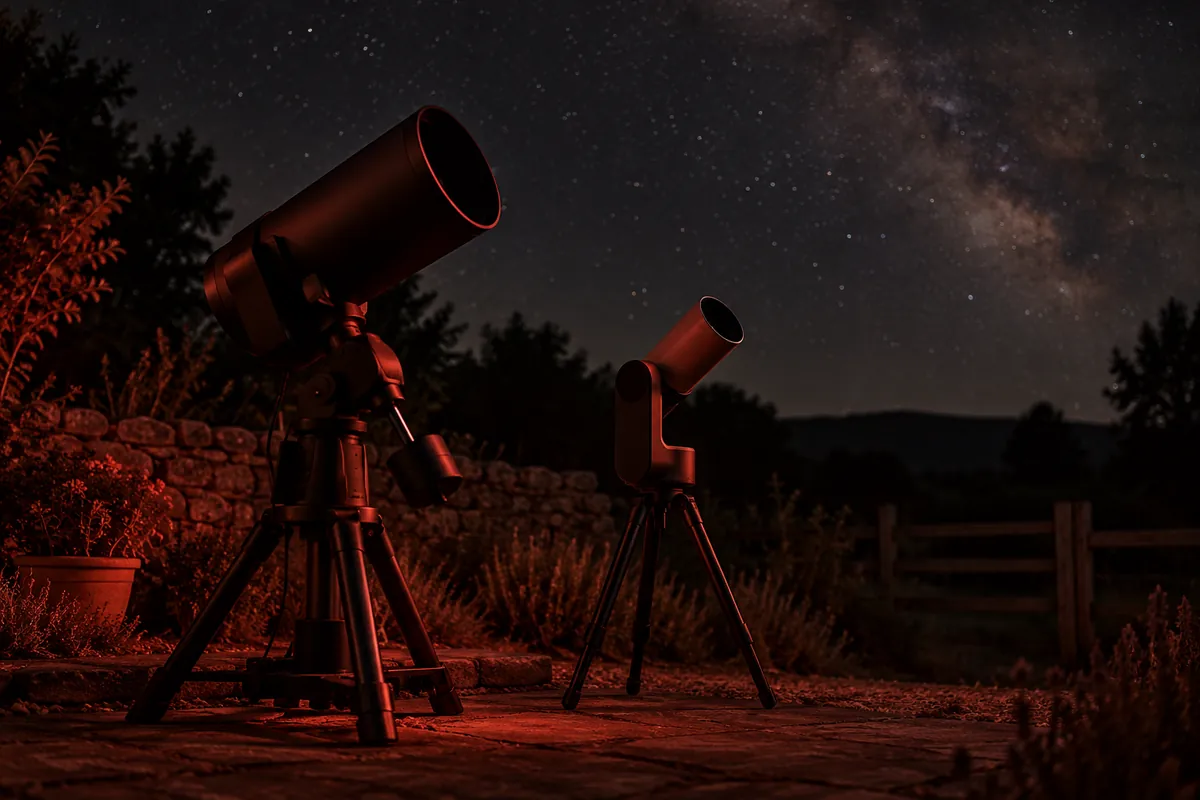
Both sit in the top budget band, and they could hardly be further apart in what they ask of you. One is a 152 mm astrograph on a heavy mount; the other a small reflector with an eyepiece that goes out in one hand.
Optics
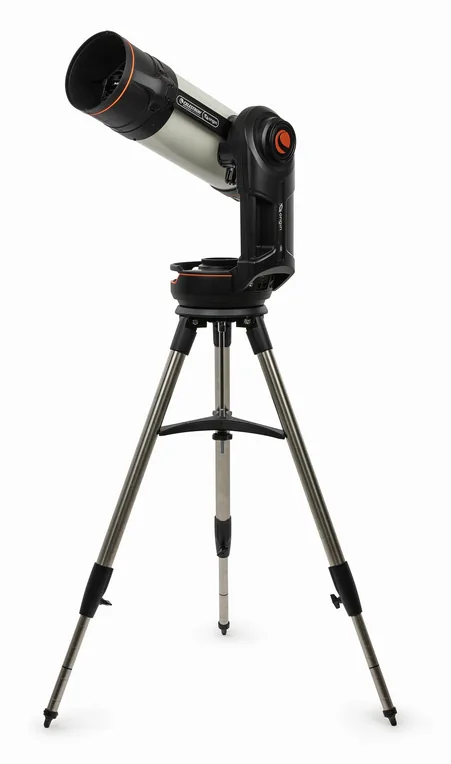
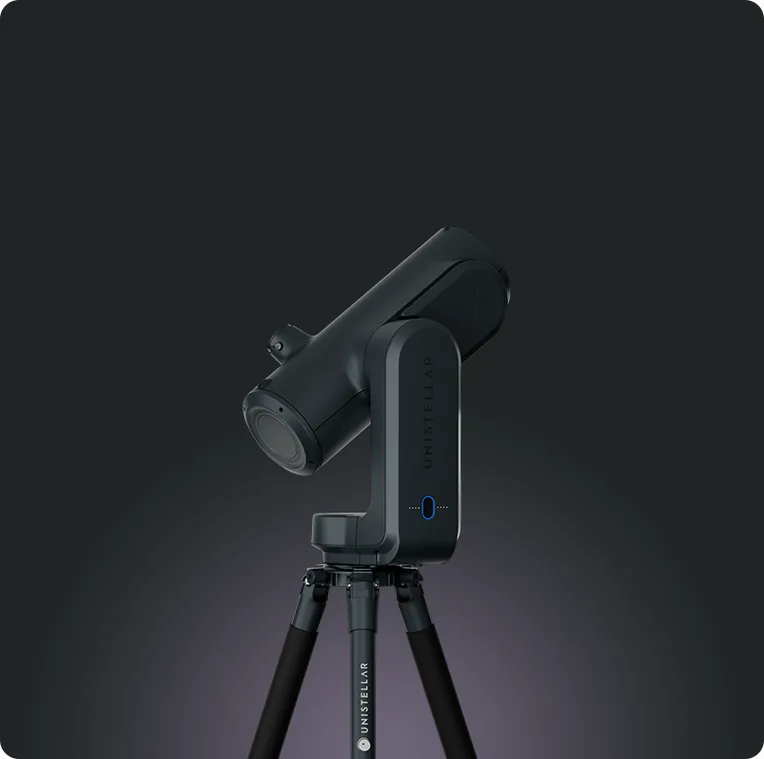
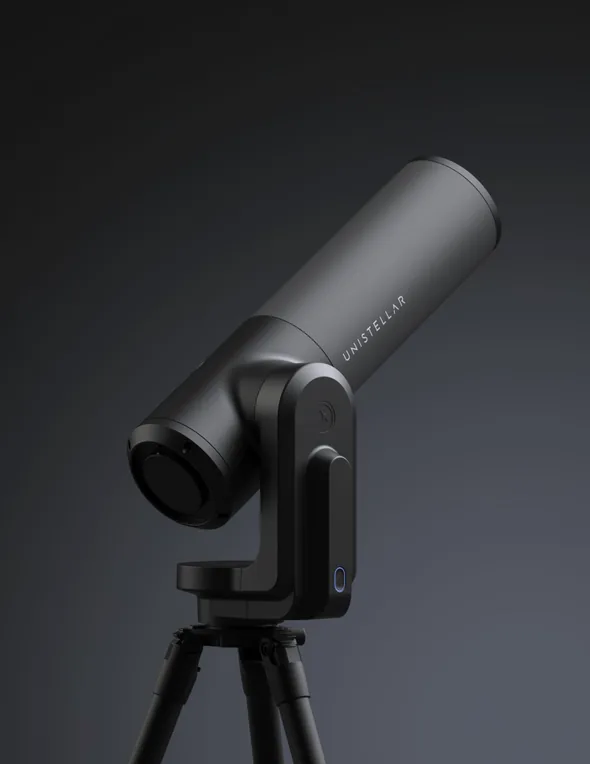
The Celestron Origin Mark II is a Rowe-Ackermann Schmidt Astrograph of 152 mm at f/2.2, with the sensor at the front of the tube. Celestron lists a light gathering power 474 times that of the eye. The Unistellar Odyssey Pro is an 85 mm reflector at 320 mm. The light score reflects the gap, 9.8 against 7.0, and the Origin's field of 1.32° by 0.75° is also wider than the Odyssey Pro's 33.6 by 45 arcminutes. On detail the order reverses: 8.1 for the Odyssey Pro's fine pixels against 6.9 for the Origin.
Weight decides much of this
Celestron gives 4.8 kg for the tube, 7.7 kg for the mount and 6.35 kg for the tripod, 18.87 kg in all. Unistellar gives 4 kg for the Odyssey Pro and 2.5 kg for its tripod. That puts portability at 2.0 for the Origin and 5.3 for the Odyssey Pro. The Origin suits a garden where it can be wheeled or carried a short distance; the Odyssey Pro a car boot or a walk to a dark field.
Features
- Eyepiece: the Odyssey Pro has an electronic eyepiece; the Origin shows its image in the app only.
- Filters: the Origin has a drawer for 1.25 or 2 inch filters; the Odyssey Pro relies on processing for light pollution.
- Dew: the Origin heats its front lens automatically; Unistellar does not list a dew heater.
- Battery: 6 hours or more for the Origin, 5 hours for the Odyssey Pro.
- Files: two USB ports on the Origin's tube give access to raw frames.
Both reach Good seeing on this site, the Origin carried by light and ease, the Odyssey Pro by detail and portability.
Around them
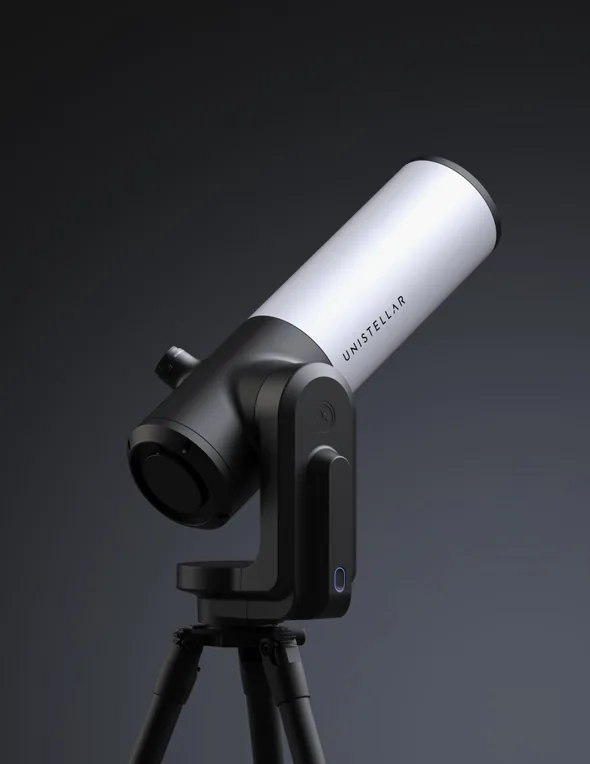
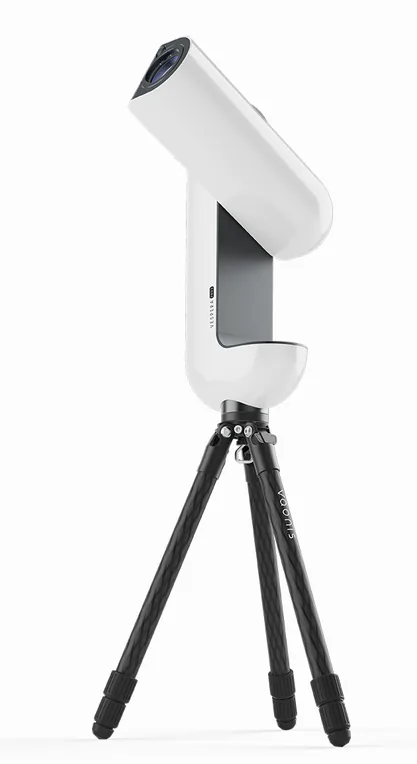
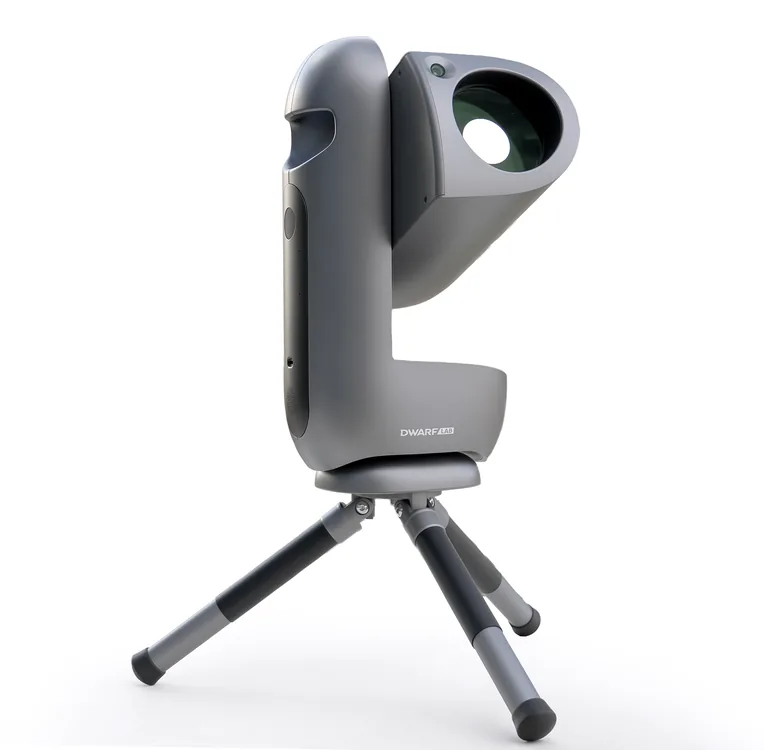
The Unistellar eVscope 2 adds a 114 mm mirror and an eyepiece at 7 kg. The Vespera Pro II offers 30 multi-night slots and a square 1.6° field. The DwarfLab Draco, in the middle band, brings 90 mm with narrowband filters at 5.5 kg. The Unistellar eQuinox 2 is the eVscope 2 without its eyepiece.
Six to compare
The models in this field note
-
152 mm, 18.87 kg, 1.32° × 0.75°
Good seeing6.3 / 10
from £3,699Typical UK retail price, 23 October 2026
See it at Celestron -
85 mm, 4 kg, 0.75° × 0.56°
Good seeing5.9 / 10
from £3,699Price at Unistellar's UK shop, 23 October 2026
See the price at Unistellar -
114 mm, 7 kg, 0.76° × 0.57°
Thin cloud5.1 / 10
£4,199Price at Unistellar's UK shop, 23 October 2026
See the price at Unistellar -
50 mm, 5 kg, 1.6° × 1.6°
Good seeing5.9 / 10
from £2,599Typical UK retail price, 23 October 2026
See it at Vaonis -
90 mm, 5.5 kg
from £1,349Typical UK retail price, 23 October 2026
See it at DwarfLab -
114 mm, 7 kg, 0.76° × 0.57°
Thin cloud5.2 / 10
£2,299Price at Unistellar's UK shop, 23 October 2026
See the price at Unistellar