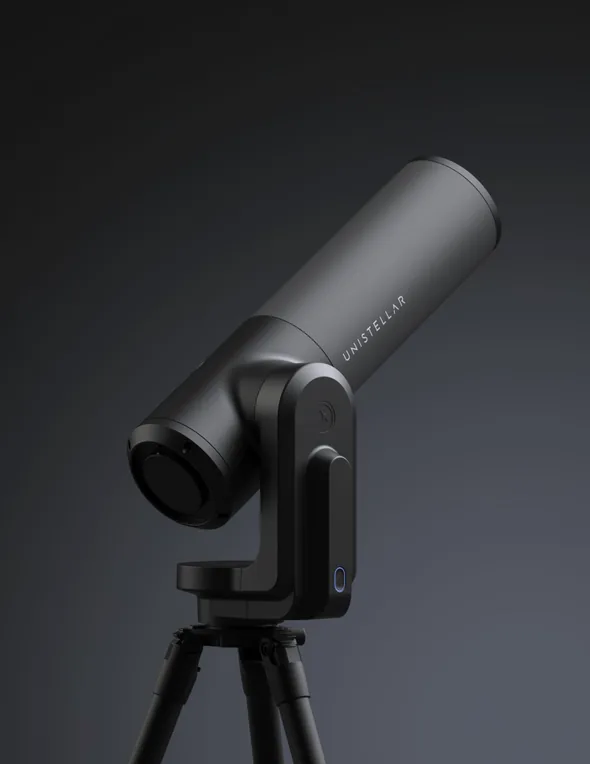
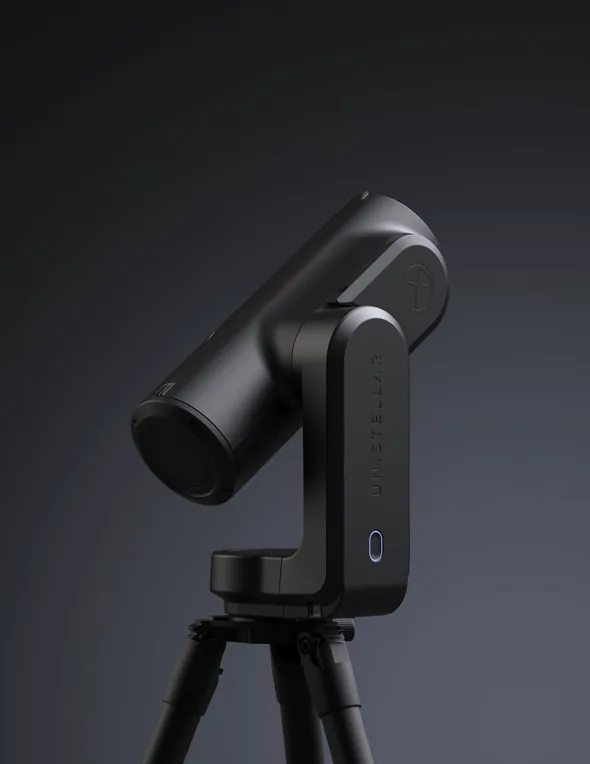
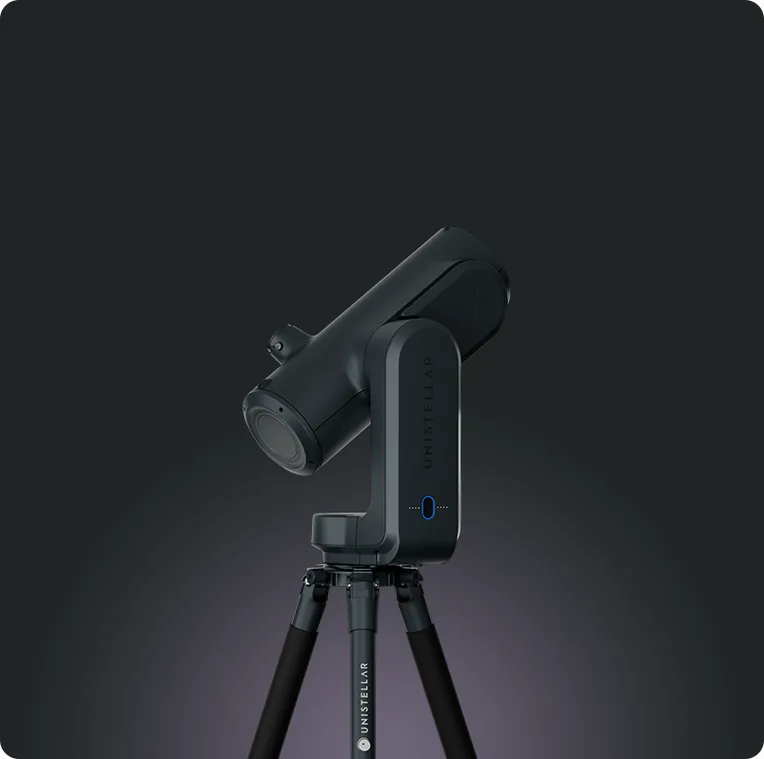
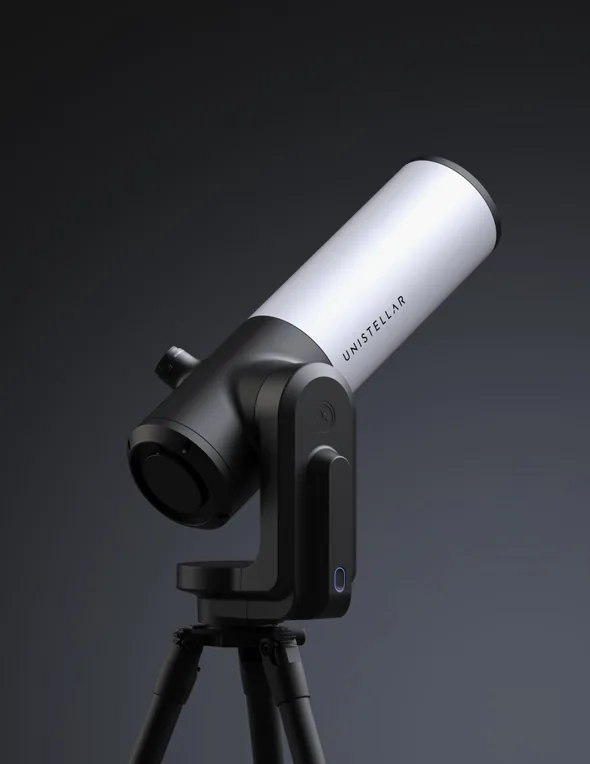
eQuinox 2 or Odyssey: Unistellar's two middle-band scopes
Both sit in the middle budget band, both share the Unistellar app and the narrow field of the brand. The choice comes down to a larger mirror against a lighter, sharper-sampling package.
Where they differ
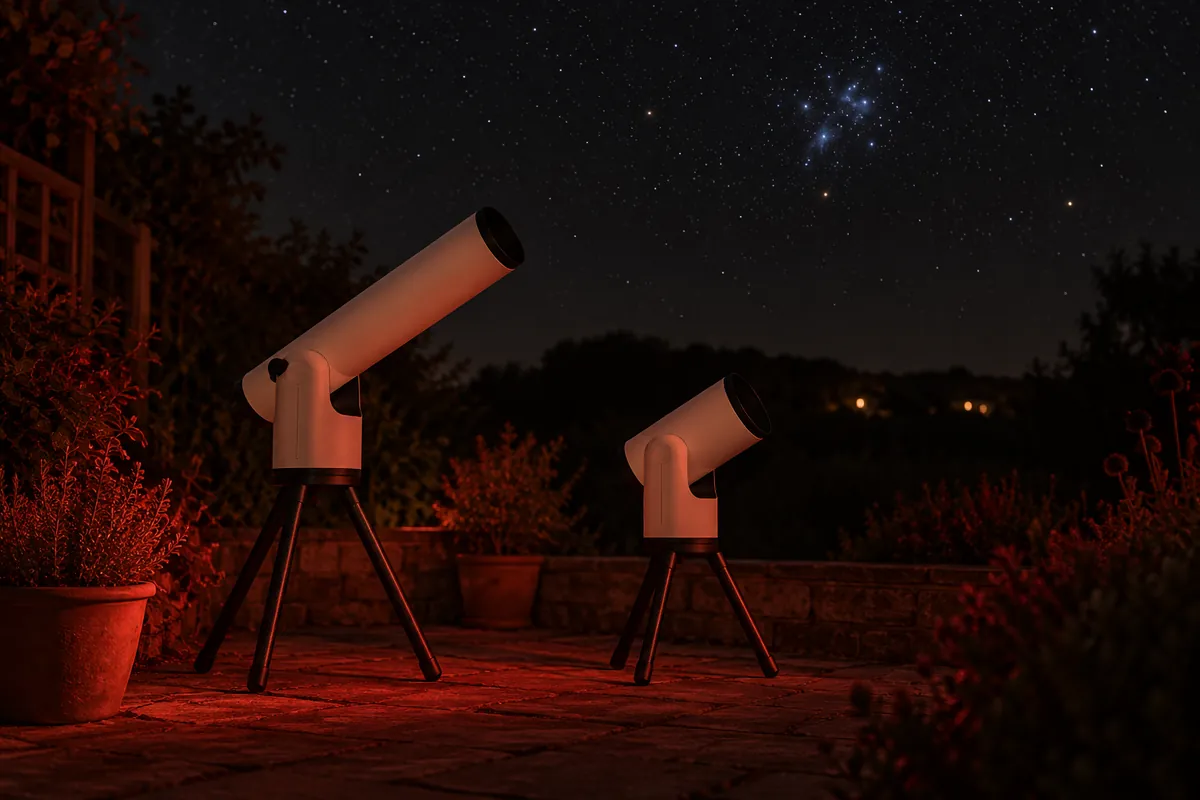
The Unistellar eQuinox 2 carries a 114 mm mirror at 450 mm focal length; the Unistellar Odyssey an 85 mm mirror at 320 mm. Unistellar quotes a limiting magnitude of 18.2 for the first and 17.2 for the second, a gap of one magnitude, or about two and a half times in brightness. On this site the light score follows the mirror: 8.4 against 7.0.
The Odyssey answers with finer sampling. Its 1.45 µm pixels at 320 mm give it a detail score of 8.1, the highest here, against 6.5 for the eQuinox 2 with its 2.9 µm pixels. Both frame about half a degree by three quarters, so the field score is the same low 1.8.
Carrying and running them
- Weight: 7 kg for the eQuinox 2 and 4 kg for the Odyssey, before tripods of 2 kg and 2.5 kg.
- Battery: 11 hours for the eQuinox 2 by Unistellar's figure, 5 hours for the Odyssey.
- Autofocus: the Odyssey has it; the eQuinox 2 does not.
- Light pollution: both rely on Unistellar's processing rather than a physical filter.
The ease score balances these: 5.7 for the eQuinox 2, held back by the missing autofocus, and 7.3 for the Odyssey, held back by its shorter battery. Overall the Odyssey reaches Good seeing and the eQuinox 2 Thin cloud, mostly because of weight.
Which sky suits which
From a dark rural garden, where galaxies are the main prize, the eQuinox 2's extra mirror area is the stronger argument, and its long battery covers a whole winter night. From a town, or for anyone who carries the telescope out and back each time, the Odyssey's 4 kg and autofocus make the evenings simpler. Neither has a wide field: large nebulae need a mosaic or a different telescope.
The neighbours
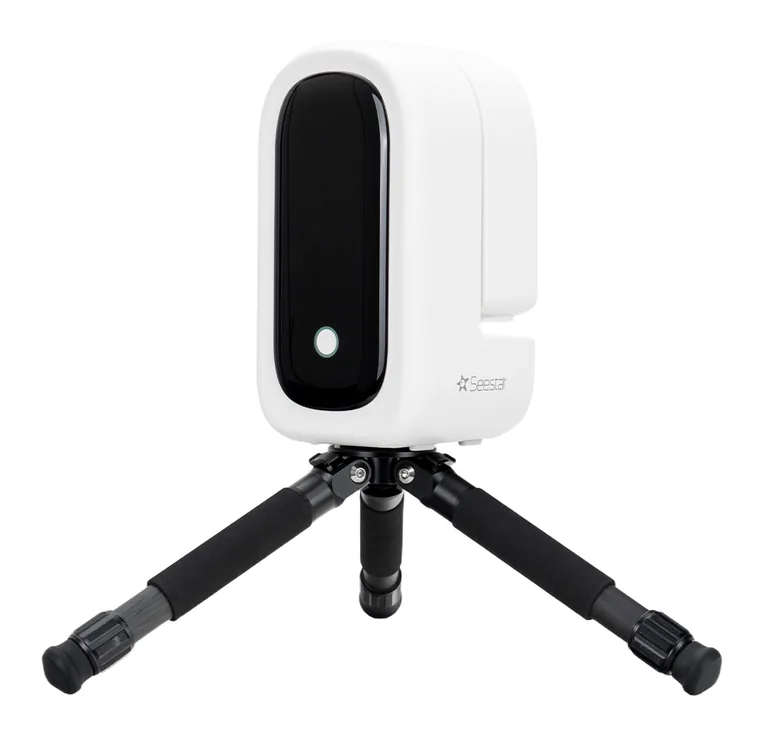
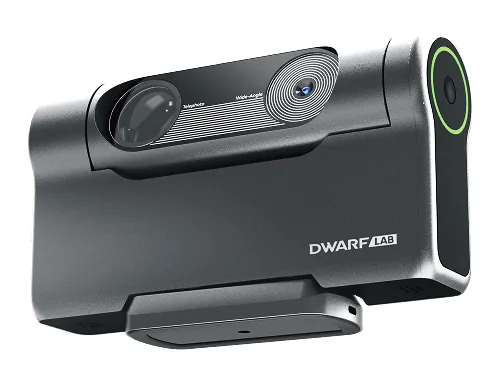
The Unistellar Odyssey Pro is the Odyssey with an electronic eyepiece, in the top band. The Unistellar eVscope 2 is the eQuinox 2 with one. Outside the brand, the Seestar S50 Pro and the Dwarf 3 trade mirror size for a much wider field and far less weight, both in the entry band.
Six to compare
The models in this field note
-
114 mm, 7 kg, 0.76° × 0.57°
Thin cloud5.2 / 10
£2,299Price at Unistellar's UK shop, 23 October 2026
See the price at Unistellar -
85 mm, 4 kg, 0.75° × 0.56°
Good seeing5.9 / 10
£2,099Price at Unistellar's UK shop, 23 October 2026
See the price at Unistellar -
85 mm, 4 kg, 0.75° × 0.56°
Good seeing5.9 / 10
from £3,699Price at Unistellar's UK shop, 23 October 2026
See the price at Unistellar -
114 mm, 7 kg, 0.76° × 0.57°
Thin cloud5.1 / 10
£4,199Price at Unistellar's UK shop, 23 October 2026
See the price at Unistellar -
50 mm, 2.8 kg, Tele: 2.8° (Portrait); Wide: 63° (Portrait)
Good seeing6.4 / 10
£999Typical UK retail price, 23 October 2026
See it at Seestar (ZWO) -
35 mm, 1.35 kg, 3°
Clear night6.7 / 10
from £459Typical UK retail price, 23 October 2026
See it at DwarfLab