Best smart telescopes for UK skies, by budget and by sky
A British clear spell is often two hours between fronts, with dew settling on everything. The smart telescopes that suit it are the ones that set up fast, keep their glass dry and cope with skyglow, and the spec sheets say a lot about which ones do.
What a British sky asks for
Three things decide whether a smart telescope earns its place in a UK garden, and none of them is the photograph on the box. The first is how quickly it goes from the back door to a stacked image, because the gaps in the cloud here rarely wait. The second is what it does about dew, which on a still autumn night can fog a front lens inside the hour. The third is skyglow: much of the country lives under the glow of towns, where a filter or careful processing matters more than a few extra millimetres of glass.
Every model on this site carries five scores worked out from the maker's own figures, explained on how scores work. They are read here against those three British needs, budget band by budget band.
The entry band
The entry band belongs to small refractors from ZWO and DwarfLab. Two of them reach the top verdict on this site, Clear night, and both do so because they are light, wide and filtered rather than because they gather a lot of light.
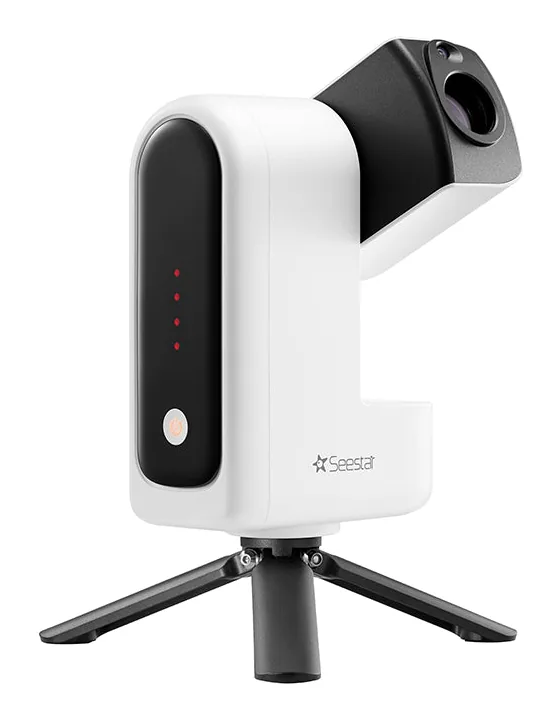
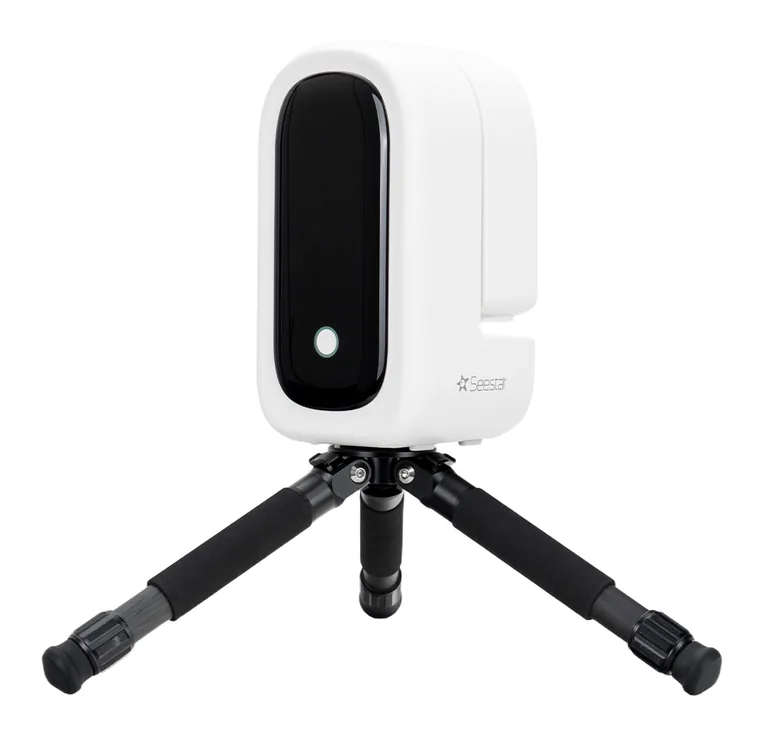
- Seestar S30 Pro: ZWO quotes a 4.6° telephoto field, 1.65 kg and six hours of battery, with a dual-band filter built in. Its field score of 9.6 is the highest of any telescope listed. Its light grasp is among the lowest, at 1.9, from a 30 mm lens.
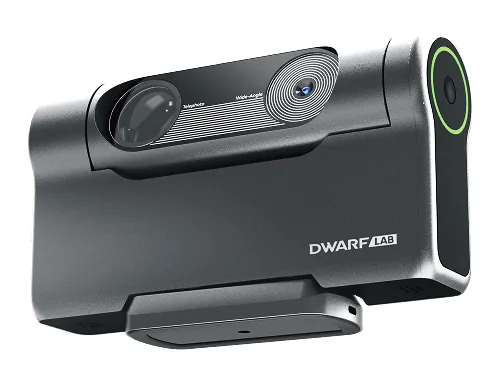
- Dwarf 3: DwarfLab lists 35 mm of aperture, a 3° field, 1.35 kg and an IP54 rating against dust and splashes, a useful line in a damp climate. The true focal length is not stated by the maker, so its detail score stays empty.
- Seestar S50 Pro: a step up to 50 mm, nine hours of battery by ZWO's own figure and 2.8 kg. The verdict is Good seeing: its light grasp and detail scores, 4.4 and 4.2, pull the average below the S30 Pro's, and the field narrows to 2.8°.
The middle band
The middle band is where Unistellar and Vaonis meet, and where the trade between aperture and field becomes plain.
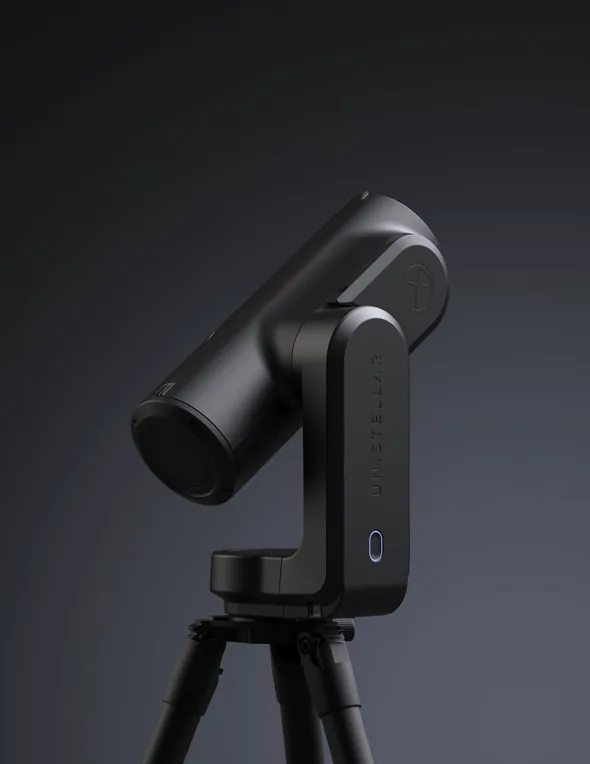
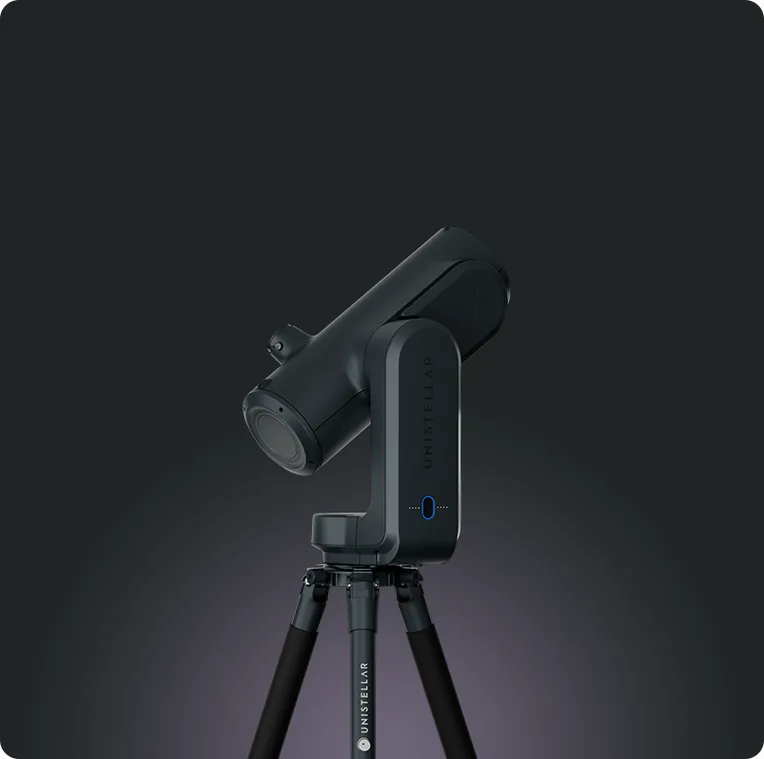
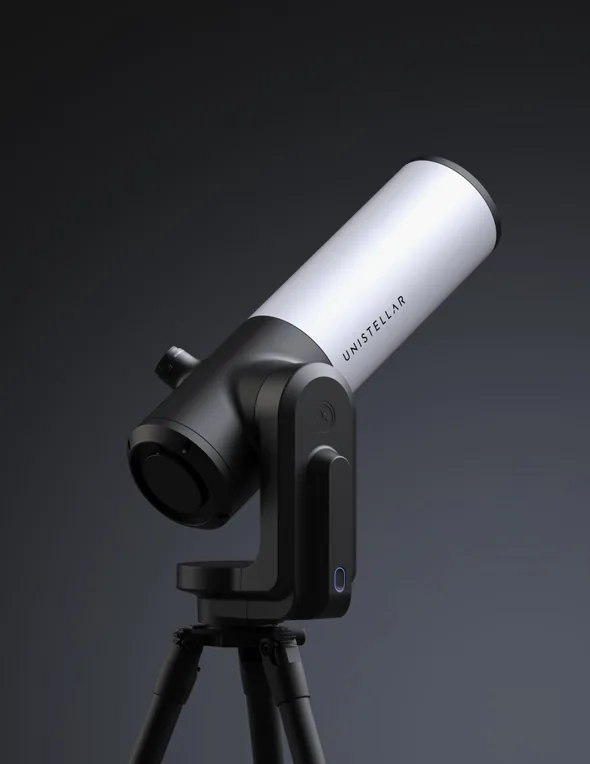
- Unistellar Odyssey: an 85 mm mirror, autofocus and the finest pixel scale in the catalogue, which gives it a detail score of 8.1, the highest on the site, shared with the Odyssey Pro. The limits are just as clear: a field of 33.6 by 45 arcminutes (well under a degree) and 4 kg for the telescope before its 2.5 kg tripod.
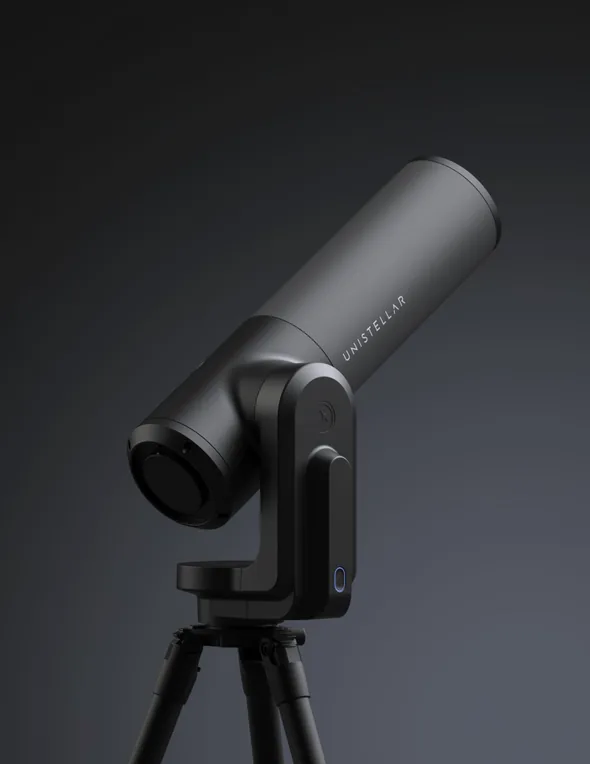
- Unistellar eQuinox 2: 114 mm of mirror and eleven hours of battery, both strong for a British night. It pays for that mirror with 7 kg on the telescope alone and the same narrow field, which is why it sits at Thin cloud.
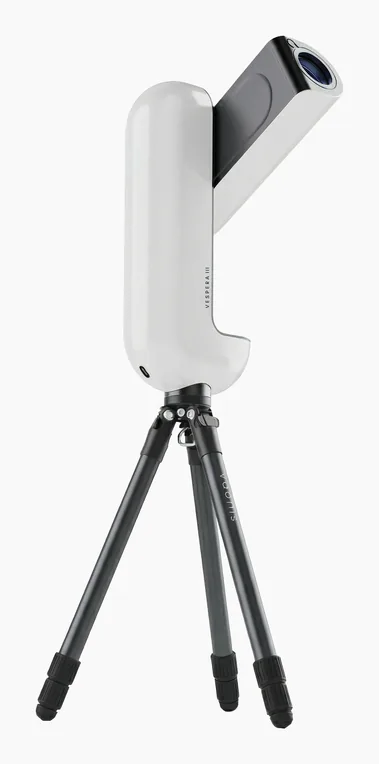
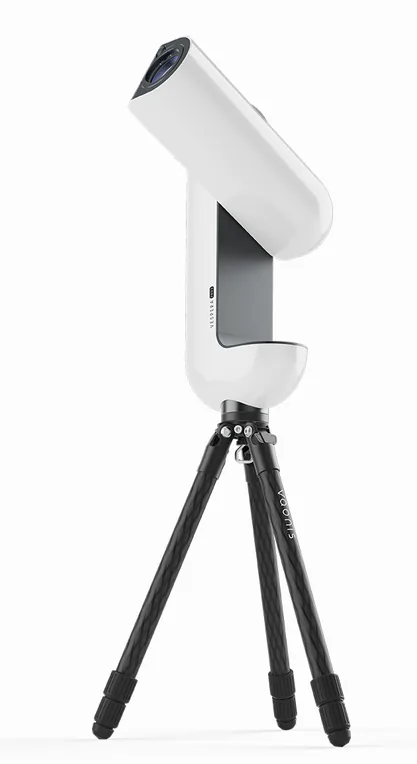
- Vespera III: a 50 mm refractor with a 2.5° by 1.4° field, eleven hours of battery and a dew heater listed by Vaonis. Its ease score of 10 is the best on the site; its light grasp of 4.4 is modest.
The top band
The top band splits three ways: more sensor, more aperture, or a screen to look into.
- Vespera Pro II: the same 50 mm optics as the Vespera III with a 12.5 MP square sensor and 2 µm pixels, so detail rises to 5.5 while the field narrows to 1.6° square.
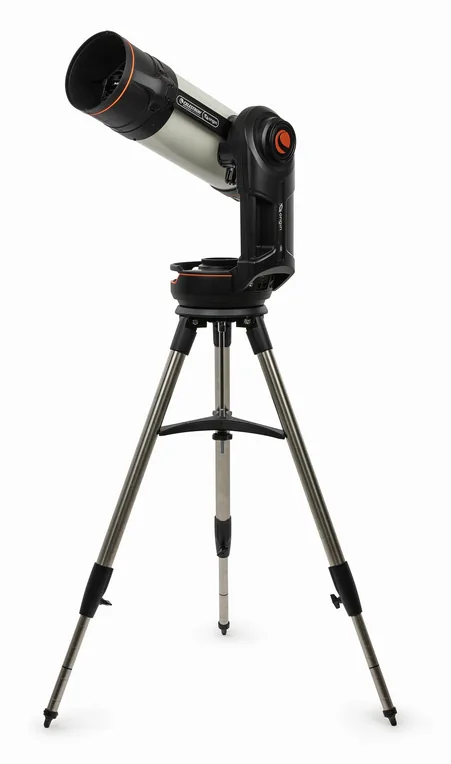
- Celestron Origin Mark II: 152 mm at f/2.2, the largest aperture here and a light grasp score of 9.8, with a dew heater in the front lens. The whole system weighs 18.87 kg by Celestron's figure, which puts it closer to a permanent setup than a grab-and-go scope.
- Unistellar Odyssey Pro and Unistellar eVscope 2: the two Unistellar models with an electronic eyepiece, for those who want to put an eye to the instrument rather than only watch a phone. They share their mirrors and focal lengths with the Odyssey and the eQuinox 2 respectively.
Choosing by sky instead
Budget is one way in. The sky over your garden is another, and it can point somewhere else entirely.
Where the verdicts surprise
Two of the most talked-about telescopes, the eVscope 2 and the eQuinox 2, sit below the small Seestar S30 Pro on the verdict scale. That is not a judgement of their mirrors, which gather far more light. It comes from the arithmetic: a field under one degree scores 1.8 out of 10, and 7 kg on the telescope scores 3.7 for portability. If your interest is small galaxies and planetary nebulae from a dark site, those two numbers matter less to you than they do to the average, and the light grasp score of 8.4 deserves more weight. The verdict is a starting point, not an instruction.
Three telescopes carry no verdict at all: the Seestar S30, the Dwarf mini and the DwarfLab Draco. Their makers leave out too many figures to work out four scores, and this site does not guess them. The Envision binoculars are not scored against telescopes in the first place.
A short way to decide
- Under orange skies, rank by filter first, then by weight.
- With a car and a dark site within reach, rank by aperture, then by battery.
- If the telescope will live by the back door, rank by weight and setup, then by field.
- If dew is your usual enemy, look for a heater on the spec sheet before anything else.
The models in this field note
-
30 mm, 1.65 kg, Tele: 4.6°; Wide: 63°
Clear night6.9 / 10
£649Typical UK retail price, 23 October 2026
See it at Seestar (ZWO) -
50 mm, 2.8 kg, Tele: 2.8° (Portrait); Wide: 63° (Portrait)
Good seeing6.4 / 10
£999Typical UK retail price, 23 October 2026
See it at Seestar (ZWO) -
35 mm, 1.35 kg, 3°
Clear night6.7 / 10
from £459Typical UK retail price, 23 October 2026
See it at DwarfLab -
85 mm, 4 kg, 0.75° × 0.56°
Good seeing5.9 / 10
£2,099Price at Unistellar's UK shop, 23 October 2026
See the price at Unistellar -
114 mm, 7 kg, 0.76° × 0.57°
Thin cloud5.2 / 10
£2,299Price at Unistellar's UK shop, 23 October 2026
See the price at Unistellar -
50 mm, 5 kg, 2.5° × 1.4°
Good seeing6 / 10
£2,199Typical UK retail price, 23 October 2026
See it at Vaonis -
50 mm, 5 kg, 1.6° × 1.6°
Good seeing5.9 / 10
from £2,599Typical UK retail price, 23 October 2026
See it at Vaonis -
85 mm, 4 kg, 0.75° × 0.56°
Good seeing5.9 / 10
from £3,699Price at Unistellar's UK shop, 23 October 2026
See the price at Unistellar -
152 mm, 18.87 kg, 1.32° × 0.75°
Good seeing6.3 / 10
from £3,699Typical UK retail price, 23 October 2026
See it at Celestron -
114 mm, 7 kg, 0.76° × 0.57°
Thin cloud5.1 / 10
£4,199Price at Unistellar's UK shop, 23 October 2026
See the price at Unistellar