Digital, electronic, smart: what the words mean
Makers and magazines use digital, electronic and smart for the same kind of instrument, and sometimes for quite different ones. Here is what each word covers, and what is worth checking before you decide one is for you.
The words, one by one
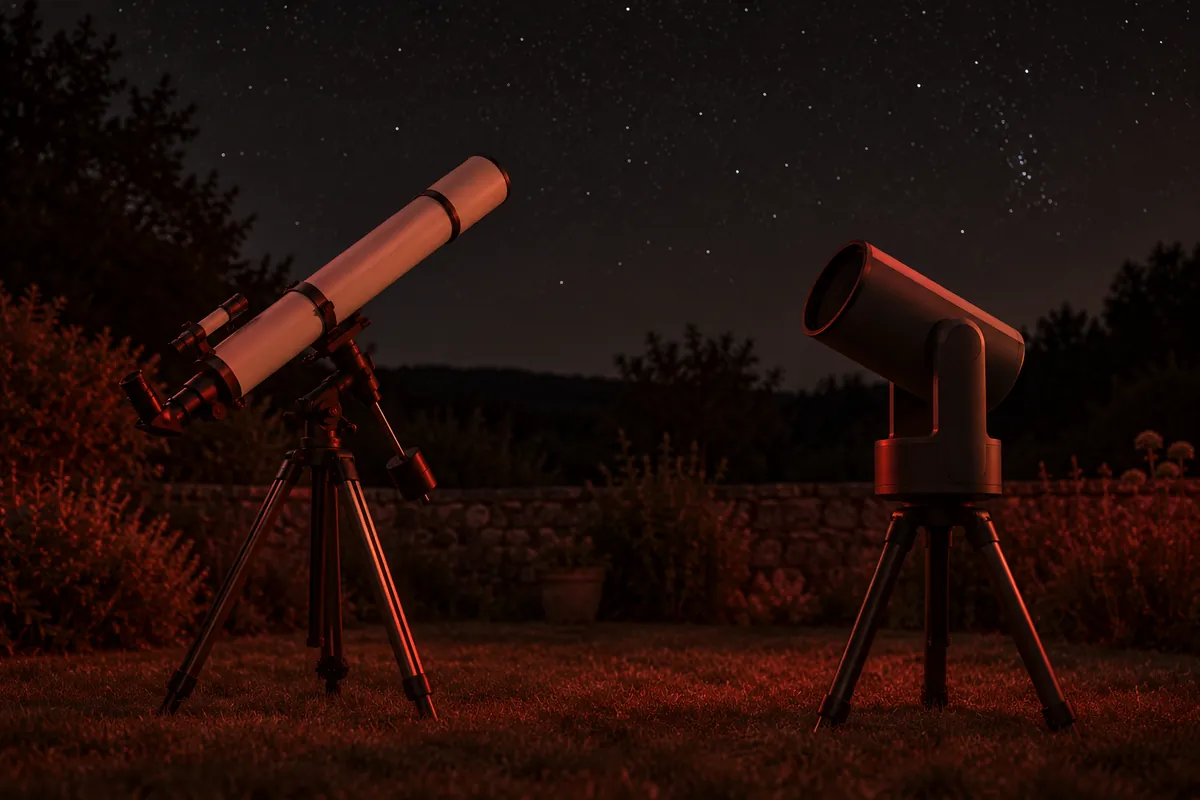
- Digital telescope: a telescope with a camera sensor in place of, or alongside, an eyepiece. The image is formed on the sensor and shown on a screen.
- Electronic eyepiece: a small display inside an eyepiece housing, showing the camera's image to an eye held against it. It looks like a conventional telescope's view, but it is a screen.
- Smart telescope: a digital telescope that also aims itself, focuses, and stacks images on board, run from a phone app. Every model on this site is one.
- Plate solving: identifying where the telescope points by matching the stars in a frame against a catalogue. It replaces manual alignment.
- Live stacking: adding frames together as they arrive, so the image grows cleaner on screen while you watch.
- Smart binoculars: binoculars with a display that overlays labels and guidance onto the real view through the glass.
Screen or eyepiece
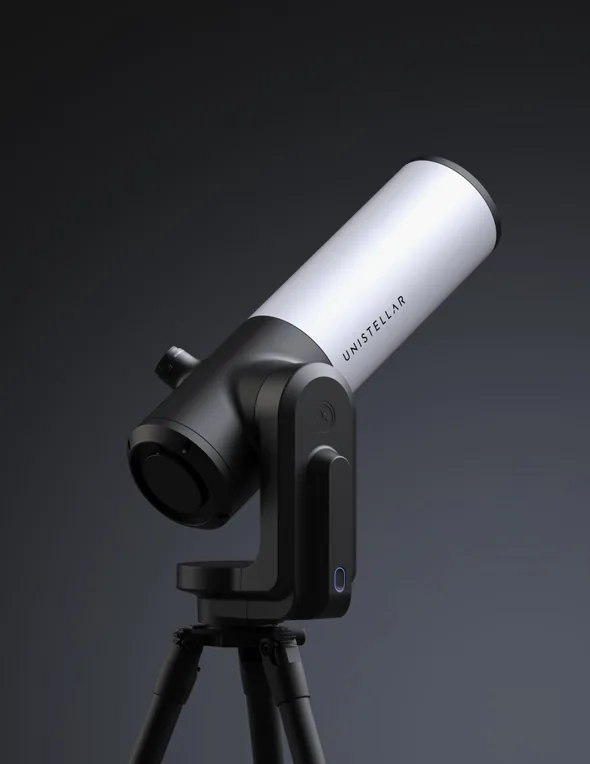
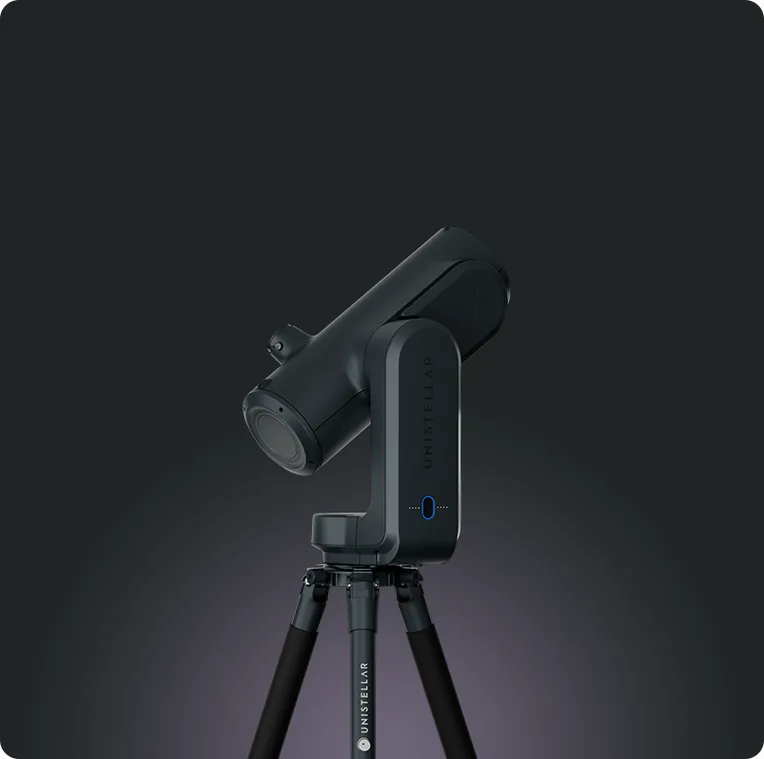
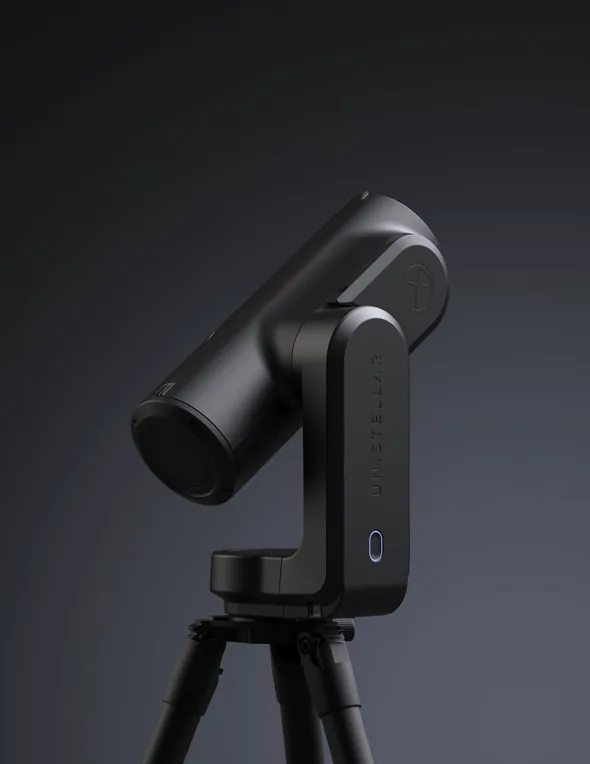
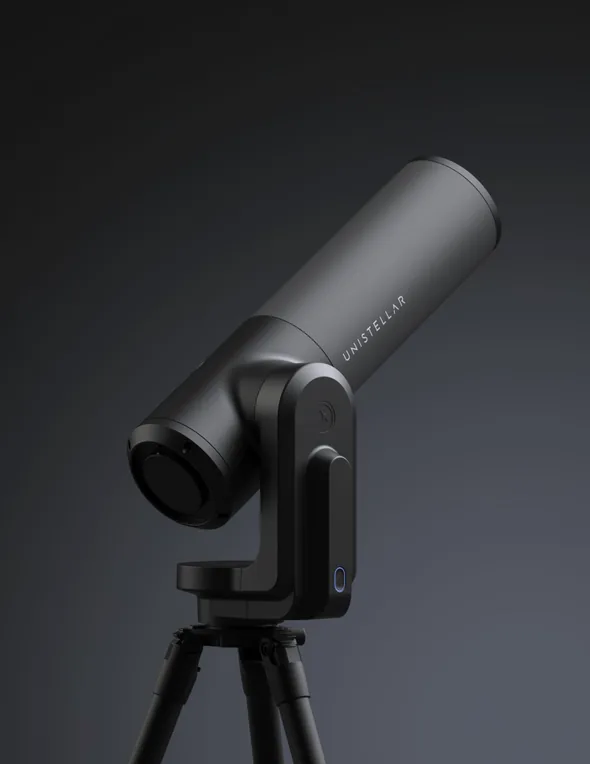
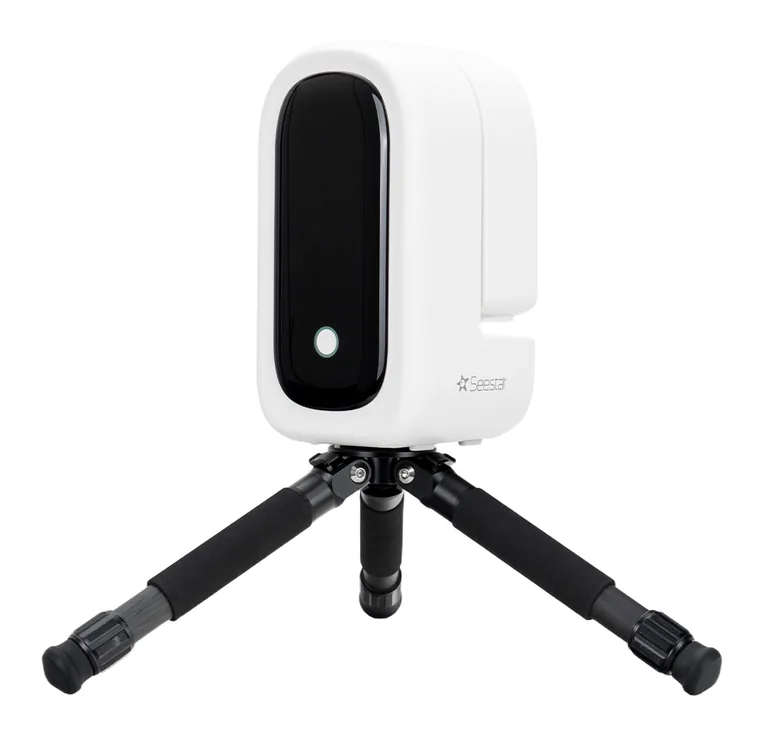
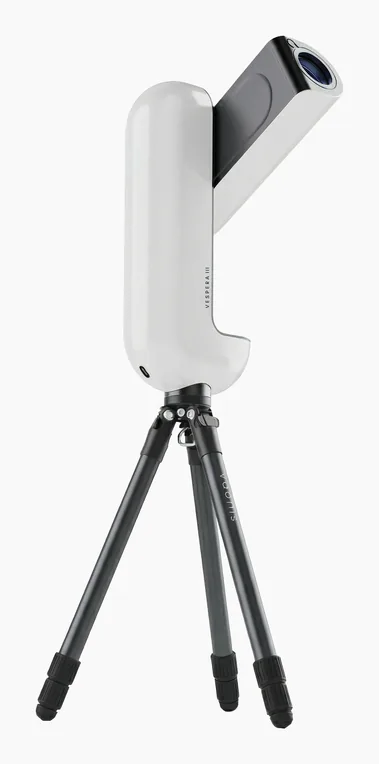
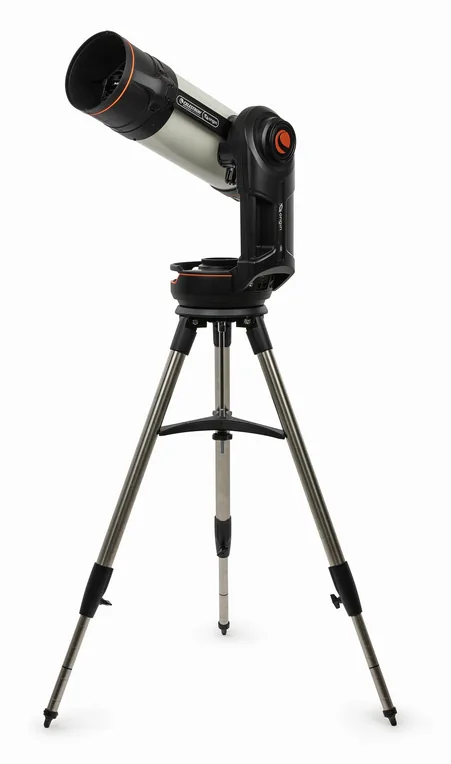
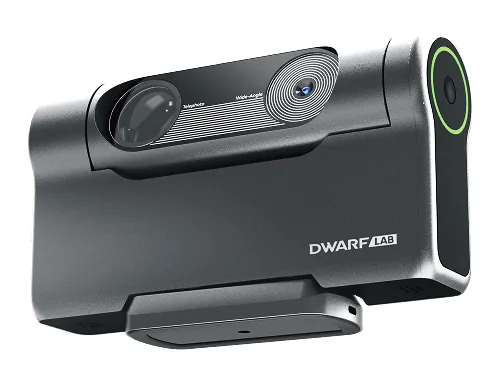
Most smart telescopes have no eyepiece at all. The Seestar S50 Pro, the Vespera III, the Dwarf 3 and the Celestron Origin Mark II show their image on the phone or tablet only. Unistellar is the exception among the brands here: the Unistellar eVscope 2 and the Unistellar Odyssey Pro carry an electronic eyepiece, while the Unistellar eQuinox 2 does without it. Unistellar does not state one for the Unistellar Odyssey in the specifications read for this site.
Whether the eyepiece is worth having is personal. It gives a sense of looking through an instrument, which many people value, and it lets someone see the live view without passing a phone around. The image is the same one the app shows.
How a smart telescope differs from a GoTo telescope
A computerised GoTo telescope also points itself, but you align it on stars first and look through an ordinary eyepiece. A smart telescope locates itself by plate solving, captures rather than shows, and does the processing. What you gain is speed and a picture of faint objects the eye cannot see from a town; what you lose is the direct view of photons through glass, and much of the control over the image chain.
Where the binoculars fit
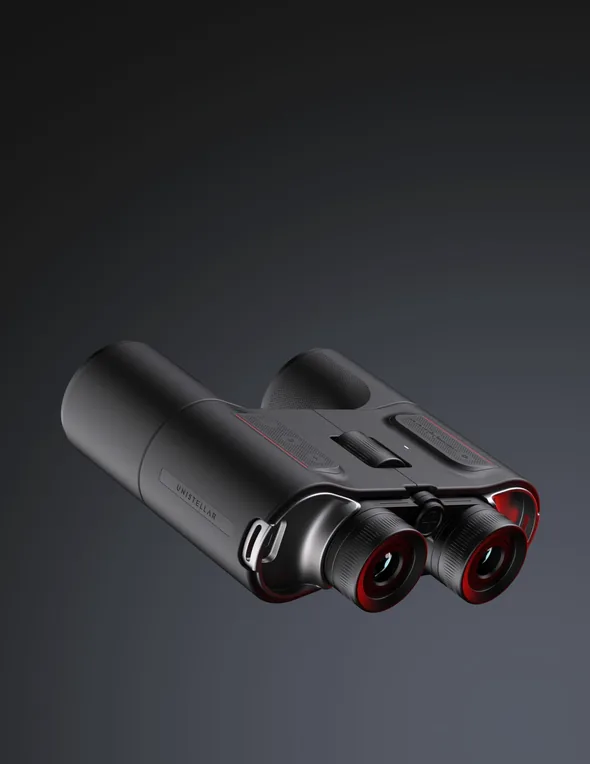
The Unistellar Envision is a different idea again. It is an optical pair of 10x50 binoculars, by Unistellar's figures, with an augmented reality display that names constellations and objects in the view. Without its battery it works as plain binoculars. The field note on smart binoculars covers it in detail; on this site it is never ranked against the telescopes.
The computer inside
Every smart telescope carries a small computer that drives the motors, runs plate solving and stacks the frames. Celestron is the one maker here to name it: a Raspberry Pi 4 Model B inside the Origin. The app on your phone is the screen and the control panel, not the processor, so a modest phone is enough. The apps are each maker's own: the Unistellar app, the Seestar app, the DWARFLAB app, Vaonis's Singularity app and the Celestron Origin app. ZWO lists Wi-Fi, USB Type-C and Bluetooth links for the S50 Pro, with a Wi-Fi range of about ten metres, which is worth knowing if you plan to watch from indoors.
Is a smart telescope worth it?
It depends on what you want out of an evening. The spec sheets point to some honest answers.
- If you want a colour image of a nebula from a town garden on the first clear night, a smart telescope does what a conventional one of the same size cannot.
- If you want to see Saturn's rings with your own eye at high power, a conventional telescope of larger aperture serves better; most smart telescopes have short focal lengths.
- If you want to learn the sky, a smart telescope helps by naming what it shows, but it also lets you skip the learning entirely.
- If you dislike apps, firmware updates and phones in the cold, a smart telescope is built around all three.
Five questions for any spec sheet
- What is the aperture, and what is the true focal length, not an equivalent figure?
- What field of view does the main camera cover, in degrees?
- What does it weigh without the tripod, and with it?
- How many hours of battery does the maker state, and is there a dew heater?
- Does it carry a light pollution filter, or does it rely on processing?
Where a maker leaves one of these out, each page on this site says "not stated by the maker" rather than filling the gap. The scoring page explains how the five answers become five scores.
The models in this field note
-
114 mm, 7 kg, 0.76° × 0.57°
Thin cloud5.1 / 10
£4,199Price at Unistellar's UK shop, 23 October 2026
See the price at Unistellar -
85 mm, 4 kg, 0.75° × 0.56°
Good seeing5.9 / 10
from £3,699Price at Unistellar's UK shop, 23 October 2026
See the price at Unistellar -
85 mm, 4 kg, 0.75° × 0.56°
Good seeing5.9 / 10
£2,099Price at Unistellar's UK shop, 23 October 2026
See the price at Unistellar -
114 mm, 7 kg, 0.76° × 0.57°
Thin cloud5.2 / 10
£2,299Price at Unistellar's UK shop, 23 October 2026
See the price at Unistellar -
50 mm, 2.8 kg, Tele: 2.8° (Portrait); Wide: 63° (Portrait)
Good seeing6.4 / 10
£999Typical UK retail price, 23 October 2026
See it at Seestar (ZWO) -
50 mm, 5 kg, 2.5° × 1.4°
Good seeing6 / 10
£2,199Typical UK retail price, 23 October 2026
See it at Vaonis -
152 mm, 18.87 kg, 1.32° × 0.75°
Good seeing6.3 / 10
from £3,699Typical UK retail price, 23 October 2026
See it at Celestron -
35 mm, 1.35 kg, 3°
Clear night6.7 / 10
from £459Typical UK retail price, 23 October 2026
See it at DwarfLab
-
50 mm, 1.2 kg, 6°
£1,299Price at Unistellar's UK shop, 23 October 2026
See the price at Unistellar