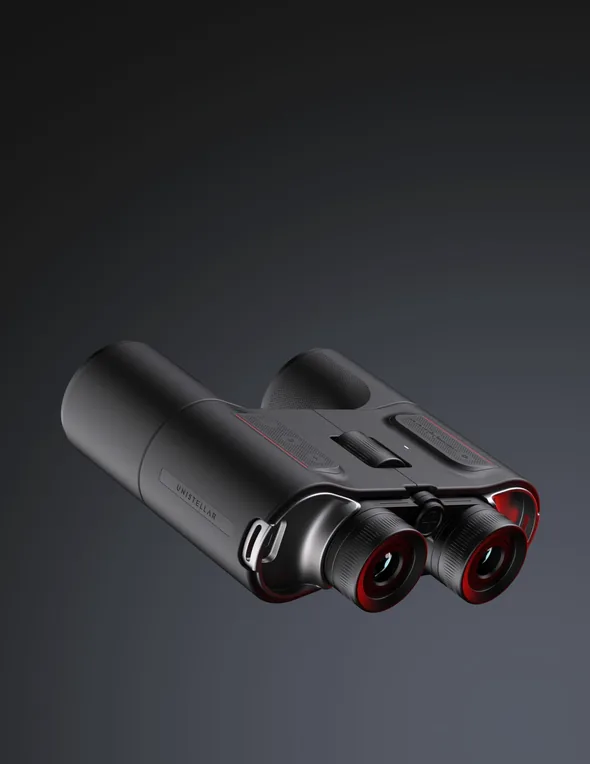
Smart binoculars: what the Envision adds to a plain pair
Binoculars are the instrument most astronomers recommend first, and the one that shows least by itself where to look. Unistellar's Envision adds a display inside the view to fill that gap.

The optics first
Under the electronics, the Unistellar Envision is a conventional pair of binoculars. Unistellar lists:
A 10x50 Porro pair is one of the classic formats for the night sky: enough aperture to show star clusters and the brighter galaxies, a field wide enough to sweep the Milky Way. The 5 mm exit pupil suits adult eyes in the dark.
What the display adds
An augmented reality display places information over the view through the glass. Unistellar states more than 1,000 sky objects and 200,000 stars in its database, so the names come to you as you sweep rather than from a chart on your knee. By day the same system draws on more than a million terrestrial points of interest, which makes the pair as much a walking companion as a night instrument.
Nothing on a smart telescope works quite like this. A telescope tells you what it has photographed; the Envision tells you what you are looking at, live, through ordinary optics.
Without the battery
Unistellar is explicit that the battery powers only the display. With it flat, the Envision works as ordinary binoculars. That matters on a cold night, when batteries fade faster, and it means the optics are never held hostage by the electronics.
What it does not do
The Envision does not photograph or stack. What you see is what your eye collects through 50 mm of glass, so faint nebulae stay faint and colour stays out of reach, just as with any binoculars. Its job is to show you where things are, not to make them brighter.
The weight also deserves a thought. At 1.2 kg, held at arm's length and magnifying 10 times, the view will show every tremor of your hands after a few minutes. Leaning on a wall or a car roof helps, and a reclining chair helps more.
Binoculars or a small smart telescope?
This site never ranks the Envision against telescopes, because they answer different questions. Still, the comparison comes up, as the smallest smart telescopes sit in the entry band, below the Envision's budget band.
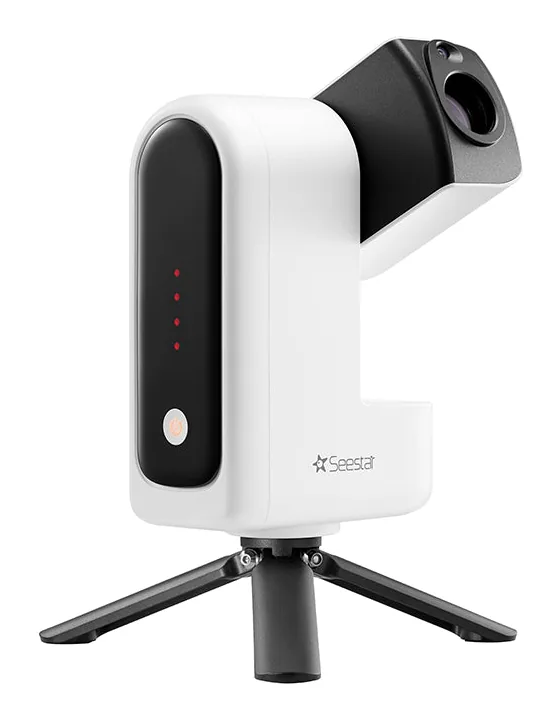
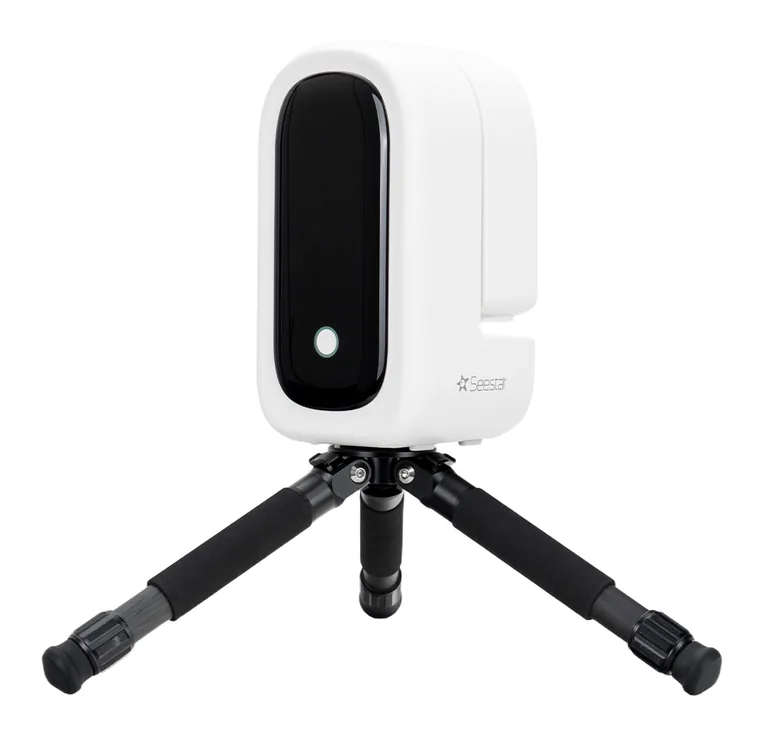
- The Seestar S30 Pro weighs 1.65 kg and frames 4.6°. It brings back colour images of nebulae, but you look at a phone rather than the sky.
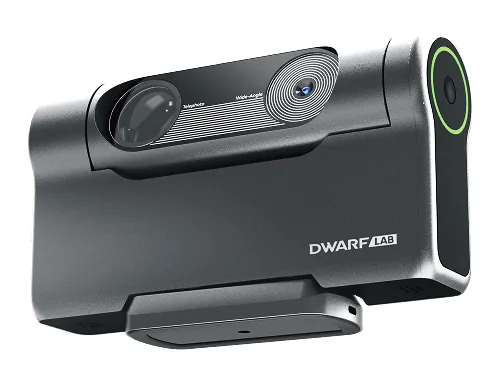
- The Dwarf mini weighs 840 g, lighter than the Envision, with its own dual-band filter for nebulae.
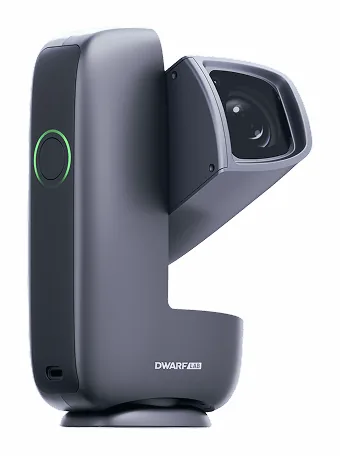
- The Dwarf 3 adds a 3° field and IP54 sealing at about 1.35 kg.
- The Seestar S50 Pro gathers more light through 50 mm of lens, the same diameter as each Envision objective, and stacks it over minutes.
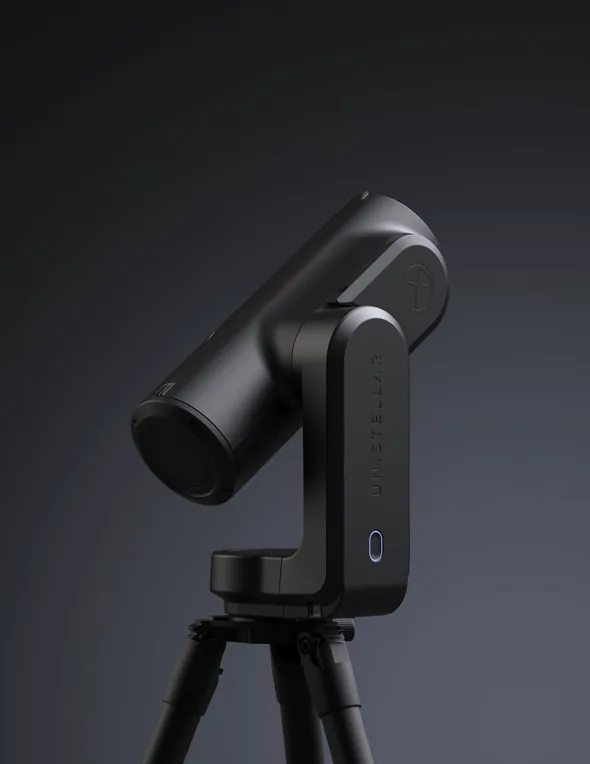
- The Unistellar Odyssey is the smallest Unistellar telescope, for those who would rather stay with the same app and brand.
The honest summary: the telescopes capture, the binoculars guide. If what draws you is learning the sky by eye, with names appearing as you sweep, the Envision does something no telescope here does. If what draws you is a picture of the Orion Nebula in colour, the telescopes do that and the binoculars cannot.
Reading the numbers
For anyone new to binoculars, the figures on the Envision follow simple rules. The first number, 10, is the magnification. The second, 50, is the diameter of each objective lens in millimetres. Divide one by the other and you have the exit pupil, 5 mm, the width of the beam of light that reaches your eye. The 6° field means the view spans about twelve full Moons side by side, wide enough to frame the whole of the Pleiades or the Double Cluster in Perseus with room to spare.
Porro prisms give the classic wide, offset shape of astronomy binoculars. BAC4 glass and full multicoating, both on Unistellar's list, are what you would expect on a pair meant for the night sky. The battery figure, 5 hours or 1,000 engagements per charge, refers only to the display.
Who it suits
- Someone who already enjoys binoculars and wants help finding objects without a chart.
- Families who want to put names to the stars over the garden together.
- Walkers who would use the daytime points of interest on the hills as much as the night labels.
It suits less well anyone who wants images to keep, or who expects electronic magnification of faint objects. The Envision is a new product and owners' accounts are still few, so the maker's figures above are, for now, most of what there is to go on.
The models in this field note
-
30 mm, 1.65 kg, Tele: 4.6°; Wide: 63°
Clear night6.9 / 10
£649Typical UK retail price, 23 October 2026
See it at Seestar (ZWO) -
30 mm, 0.84 kg
from £399Typical UK retail price, 23 October 2026
See it at DwarfLab -
35 mm, 1.35 kg, 3°
Clear night6.7 / 10
from £459Typical UK retail price, 23 October 2026
See it at DwarfLab -
50 mm, 2.8 kg, Tele: 2.8° (Portrait); Wide: 63° (Portrait)
Good seeing6.4 / 10
£999Typical UK retail price, 23 October 2026
See it at Seestar (ZWO) -
85 mm, 4 kg, 0.75° × 0.56°
Good seeing5.9 / 10
£2,099Price at Unistellar's UK shop, 23 October 2026
See the price at Unistellar
-
50 mm, 1.2 kg, 6°
£1,299Price at Unistellar's UK shop, 23 October 2026
See the price at Unistellar