DwarfLab Draco
DwarfLab's 90 mm aperture, dual-narrowband filters and equatorial mode
At a glance
Draco combines a 90 mm aperture with autofocus, built-in filters and an equatorial mode. Its 5.5 kg body and maker-stated 5-hour battery life are the main practical trade-offs.
Five scores, from 1 to 10
- Light graspaperture, against every scope listed here7.2
- Portabilitycarry weight, without the tripod4.4
- Easebattery, autofocus, dew heater, light pollution handling8.3
The sums behind these figures are set out on how scores work. With no figure from the maker, a row stays empty.
Compared with Unistellar
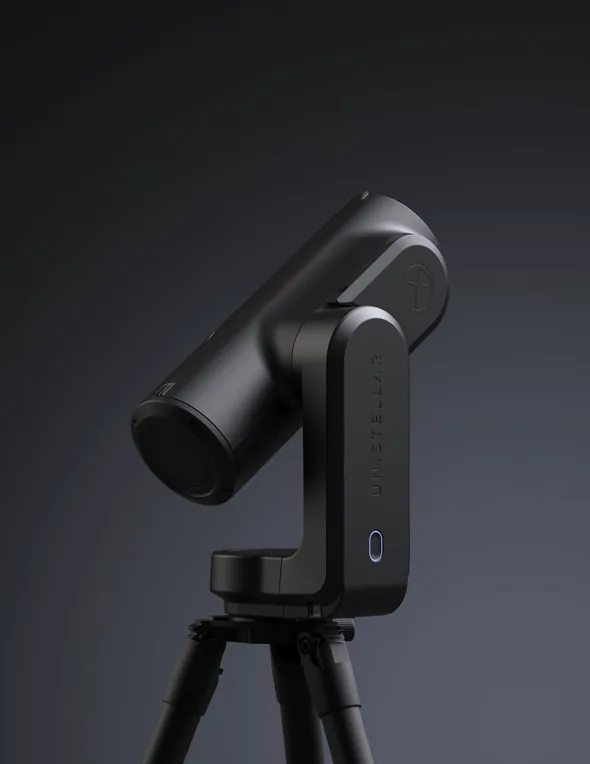 Unistellar Odyssey
£2,099Price at Unistellar's UK shop, 23 October 2026
| Spec | DwarfLab Draco | Unistellar Odyssey |
|---|---|---|
| Aperture | 90 mm | 85 mm |
| Weight | 5.5 kg | 4 kg |
DwarfLab Draco specifications
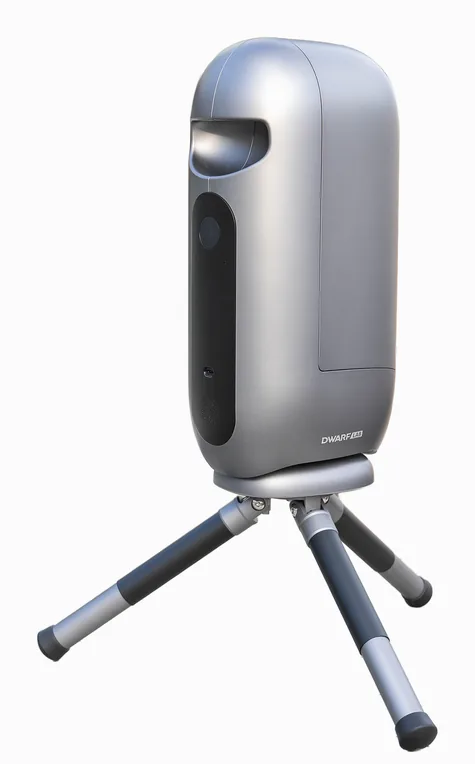
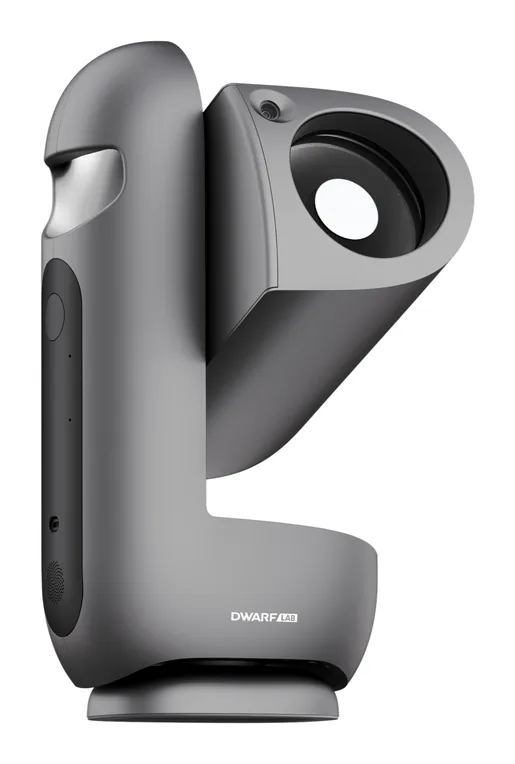
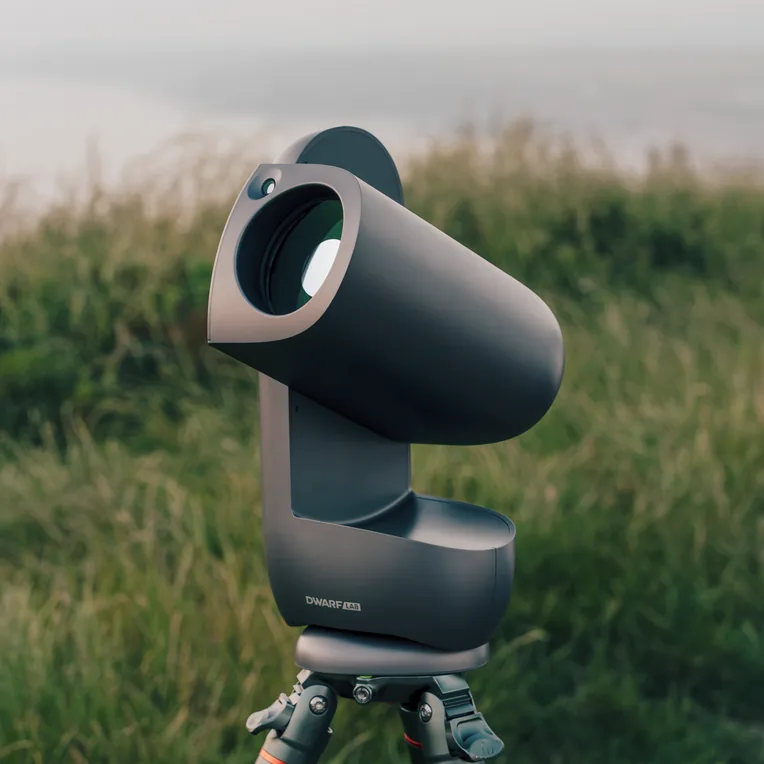
90 mm (3.5 in) aperture gives the Draco a larger light-collecting opening than most of the telescopes compared. Its alt-azimuth mount also has an equatorial mode, giving you a choice of mount tracking modes for your garden setup.
Built-in filters include astronomy and dark-frame options, plus dual-narrowband Ha + OIII with a stated bandwidth of 13 +/- 3 nm. The SHO Edition adds a dual-narrowband SII + OIII filter, giving you a different built-in filter option for imaging.
Autofocus handles focusing automatically, while the DWARFLAB app provides the instrument's app control. For a session in your garden, these features reduce the need for manual focusing and ongoing adjustment.
The maker quotes a battery life of 5 hours. That gives you a manufacturer-stated session duration to consider when planning an evening, rather than an observed runtime.
The maker quotes a body weight of 5.5 kg, with the tripod excluded. That is heavier to carry out than most of the telescopes compared, so the body's weight is a practical factor when you move it between storage and your observing spot.
How the Draco compares
Light grasp: Among the higher apertures, the 90 mm opening gathers more light than most of them.
Portability: Towards the heavier end, the 5.5 kg body takes more carrying effort than most of the telescopes compared.
Ease: In the middle of the group, the Draco combines 5 hours of maker-quoted battery life with autofocus and a built-in light pollution filter.
See it at DwarfLabDwarfLab Draco, from £1,349, Typical UK retail price, 23 October 2026
Specifications
| Optical design | not stated by the maker |
|---|---|
| Aperture | 90 mm (3.5 in) |
| Focal length | not stated by the maker |
| Focal ratio | not stated by the maker |
| Sensor | not stated by the maker |
| Pixel size | not stated by the maker |
| Image size | not stated by the maker |
| Field of view | not stated by the maker |
| Limiting magnitude (maker's figure) | not stated by the maker |
| Mount | Alt-azimuth, with an equatorial mode |
| Electronic eyepiece | not stated by the maker |
| Filters built in | astronomy, dark-frame, dual-narrowband Ha + OIII (13 +/- 3 nm), dual-narrowband SII + OIII (SHO Edition) |
| Autofocus | Yes |
| Battery life (maker's figure) | 5 h |
| Weight | 5.5 kg |
| Storage | not stated by the maker |
| Dew heater | not stated by the maker |
| Weather rating | not stated by the maker |
| App | DWARFLAB app |
Source: the maker's own specification sheet. Where it says "not stated by the maker", the maker has not given that figure so far.
Versions: 2 to choose from
Typical UK retail price, 23 October 2026. Each row leads to that version at the shop.
Strengths and limits
- The 90 mm (3.5 in) aperture gathers more light than most of the telescopes in this comparison, according to the maker.
- The alt-azimuth mount includes an equatorial mode.
- The maker lists autofocus, a built-in light pollution filter and dual-narrowband filters, including Ha + OIII at 13 +/- 3 nm.
- At 5.5 kg for the body, with the tripod excluded, it is heavier to carry out than most of the telescopes compared, according to the maker.
- The maker states a battery life of 5 hours.
Who it suits, and which skies
For town skies
A good match if you want a 90 mm aperture, autofocus or built-in dual-narrowband filters.
Less so if you need a lighter body to carry or a battery life longer than the maker-stated 5 hours.
Bundles and prices for each version sit in the table above; the current line-up is on the shop's own page.
Questions about the DwarfLab Draco
- How heavy is Draco to carry?
- The maker gives the body weight as 5.5 kg, with the tripod excluded.
- Could its filters suit a city sky?
- The maker lists a built-in light pollution filter and a dual-narrowband Ha + OIII filter at 13 +/- 3 nm.
- What mount modes are listed?
- Draco has an alt-azimuth mount with an equatorial mode, according to the maker.
- Does Draco have autofocus?
- Yes. The maker lists autofocus and states a battery life of 5 hours.
Photos
Last light
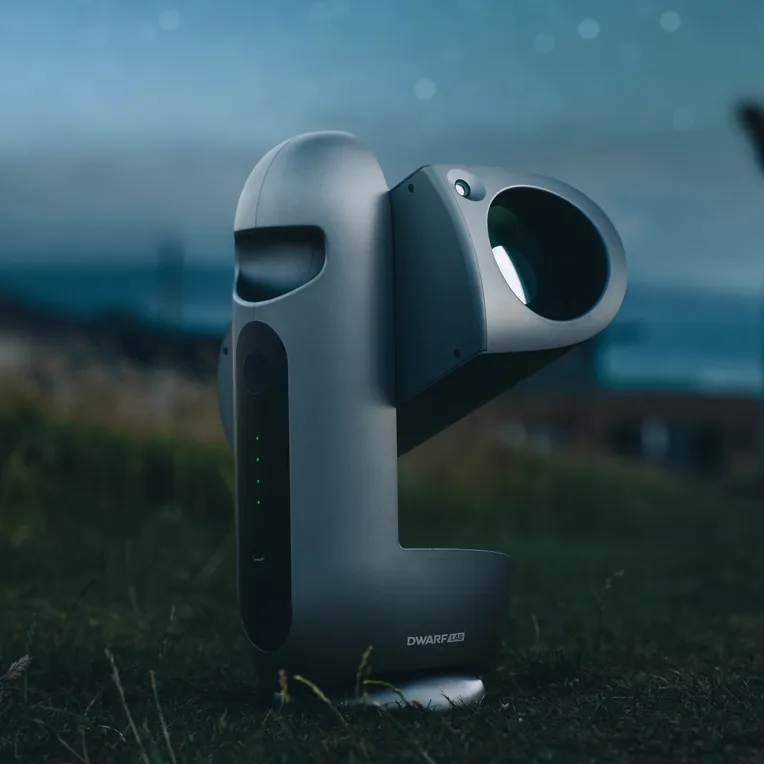
The maker's listed 90 mm aperture is larger than that of most telescopes in this comparison. Autofocus, a built-in light pollution filter and two listed dual-narrowband filter options give Draco a broad set of stated features. The body weight is 5.5 kg, with the tripod excluded, and the maker states a 5-hour battery life. It is a feature-rich option if you can accommodate that carrying weight.
See it at DwarfLabfrom £1,349, Typical UK retail price, 23 October 2026
Field notes that mention it
Nearby in the sky: similar scopes
- Unistellar Odyssey85 mm, 4 kg, 0.75° × 0.56°, £2,099
- Vaonis Vespera II50 mm, 5 kg, 2.5° × 1.4°, from £1,398
- Unistellar eQuinox 2114 mm, 7 kg, 0.76° × 0.57°, £2,299
- ZWO Seestar S50 Pro50 mm, 2.8 kg, Tele: 2.8° (Portrait); Wide: 63° (Portrait), £999