DwarfLab Dwarf mini
DwarfLab's integrated filters and compact optical system, compared
At a glance
The Dwarf mini is a compact smart telescope with autofocus, an equatorial mode and three listed filter options. Its 30 mm aperture is a clear limit for light gathering compared with most telescopes in this comparison.
Five scores, from 1 to 10
- Light graspaperture, against every scope listed here1.9
- Portabilitycarry weight, without the tripod9.9
The sums behind these figures are set out on how scores work. With no figure from the maker, a row stays empty.
Compared with Unistellar
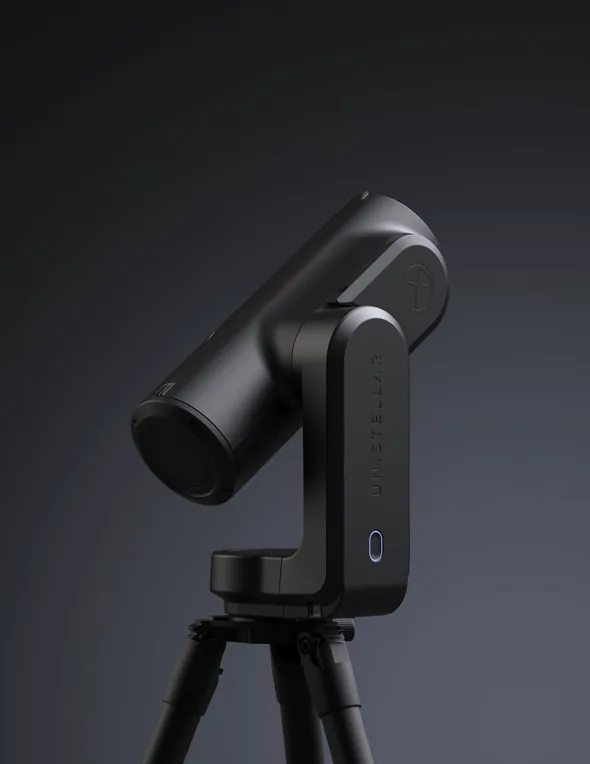 Unistellar Odyssey
£2,099Price at Unistellar's UK shop, 23 October 2026
| Spec | DwarfLab Dwarf mini | Unistellar Odyssey |
|---|---|---|
| Aperture | 30 mm | 85 mm |
| Weight | 0.84 kg | 4 kg |
Filters and imaging
The 430-690 nm Astro filter is built into the Dwarf mini, alongside a dual narrowband filter centred on Ha at 656.3 nm and OIII at 500.7 nm.
A dark-frame filter is also built in. The three filter options give you distinct settings to select in the DWARFLAB app, with the narrowband filter specified by its two emission lines and the Astro filter by its wavelength range.
The Sony IMX662 image sensor has a resolution of 2 MP, with a pixel size of 2.9 µm. Those figures describe the sensor's pixel count and individual pixel dimensions, useful reference points when considering the image data the Dwarf mini is designed to capture.
Autofocus is included, so focusing is handled by the telescope rather than requiring manual adjustment. The DWARFLAB app provides the control interface for this smart telescope, bringing its camera and optical system under app control.
Aperture, mount and carrying weight
The 30 mm (1.2 in) aperture is the opening through which the Dwarf mini gathers light. For your garden observing, that modest aperture is the main constraint on light collection compared with the larger telescopes in this comparison.
Light grasp: Lower than most telescopes compared (the aperture is compared across the instruments).
The alt-azimuth mount also has an equatorial mode. That gives you a choice of tracking configuration, with the mount's standard arrangement remaining alt-azimuth.
The weight is 0.84 kg according to the maker, with the tripod excluded from the portability ranking. That low carried weight makes the Dwarf mini easier to take out than most of the telescopes compared, particularly when you are carrying it from indoors to your garden.
Portability: Lighter to carry out than most telescopes compared (weight carried out, tripod excluded).
See it at DwarfLabDwarfLab Dwarf mini, from £399, Typical UK retail price, 23 October 2026
What the figures mean for your garden
The Dwarf mini's specifications centre on a 30 mm aperture, a 2 MP sensor and built-in filters, rather than a larger light-gathering opening. The dual narrowband filter's Ha and OIII wavelengths are particularly specific: they define the two bands available for emission-nebula imaging, while the Astro filter covers a broader stated range.
Your setup choices are therefore shaped by the compact aperture and the available filters. The 0.84 kg weight supports easy carrying, while the DWARFLAB app and autofocus keep control and focusing within the instrument's stated automated features. These figures describe what the Dwarf mini provides, without promising a particular result under changing British skies.
Specifications
| Optical design | not stated by the maker |
|---|---|
| Aperture | 30 mm (1.2 in) |
| Focal length | not stated by the maker |
| Focal ratio | not stated by the maker |
| Sensor | Sony IMX662, 2 MP |
| Pixel size | 2.9 µm |
| Image size | not stated by the maker |
| Field of view | not stated by the maker |
| Limiting magnitude (maker's figure) | not stated by the maker |
| Mount | Alt-azimuth, with an equatorial mode |
| Electronic eyepiece | not stated by the maker |
| Filters built in | dark-frame, Astro (430-690 nm), dual narrowband Ha 656.3 nm + OIII 500.7 nm |
| Autofocus | Yes |
| Battery life (maker's figure) | not stated by the maker |
| Weight | 0.84 kg |
| Storage | not stated by the maker |
| Dew heater | not stated by the maker |
| Weather rating | not stated by the maker |
| App | DWARFLAB app |
Source: the maker's own specification sheet. Where it says "not stated by the maker", the maker has not given that figure so far.
Versions: 2 to choose from
Typical UK retail price, 23 October 2026. Each row leads to that version at the shop.
Strengths and limits
- The maker specifies a Sony IMX662 image sensor with 2 MP resolution and 2.9 µm pixels.
- Autofocus is listed, alongside an alt-azimuth mount with an equatorial mode.
- The maker lists Astro and dual narrowband filters, including Ha at 656.3 nm and OIII at 500.7 nm.
- According to the maker, its 30 mm (1.2 in) aperture gathers less light than most of the telescopes in this comparison.
- The maker states a weight of 0.84 kg with the tripod excluded; the comparison ranks it lighter to carry than most of the other telescopes.
Who it suits, and which skies
For first nightsFor town skiesGrab and go
A good match if you want a lightweight smart telescope, autofocus or an equatorial mode.
Less so if you prioritise aperture or light gathering over a low carry weight.
Bundles and prices for each version sit in the table above; the current line-up is on the shop's own page.
Questions about the DwarfLab Dwarf mini
- How heavy is the Dwarf mini to carry?
- The maker states a weight of 0.84 kg, with the tripod excluded.
- What mount and focusing features are listed?
- The maker lists an alt-azimuth mount with an equatorial mode, plus autofocus.
- Which filters are included for a light-polluted city sky?
- The maker lists an Astro filter covering 430-690 nm and a dual narrowband filter at Ha 656.3 nm and OIII 500.7 nm.
Photos
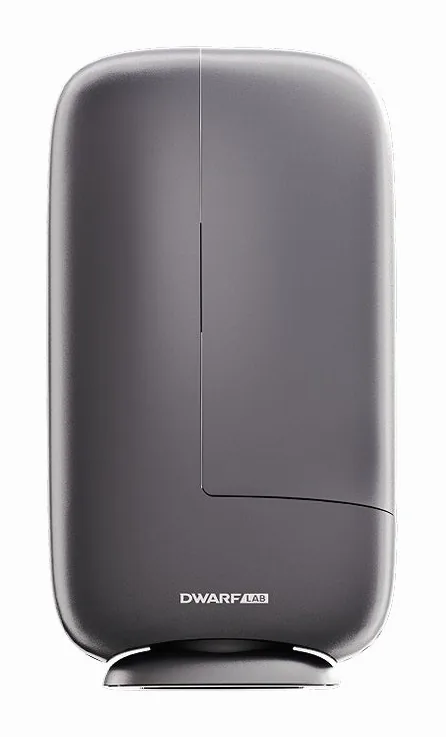
Last light
According to the maker, the Dwarf mini combines a 30 mm aperture with a Sony IMX662 image sensor, 2 MP resolution and 2.9 µm pixels. Its 0.84 kg weight, with the tripod excluded, makes it lighter to carry than most of the compared telescopes. Autofocus and an equatorial mode add useful specification breadth, while the listed Astro and dual narrowband filters give you filter choices. The maker's aperture comparison points to limited light gathering relative to most of the other telescopes here.
See it at DwarfLabfrom £399, Typical UK retail price, 23 October 2026
Field notes that mention it
Nearby in the sky: similar scopes
- ZWO Seestar S3030 mm, 1.65 kg, £419
- ZWO Seestar S30 Pro30 mm, 1.65 kg, Tele: 4.6°; Wide: 63°, £649
- DwarfLab Dwarf 335 mm, 1.35 kg, 3°, from £459
- ZWO Seestar S50 Pro50 mm, 2.8 kg, Tele: 2.8° (Portrait); Wide: 63° (Portrait), £999