Unistellar Odyssey
Unistellar Odyssey specifications, from autofocus to its compact field
At a glance
Good seeing5.9 out of 10
The Odyssey combines an 85 mm (3.3 in) aperture, autofocus and app-based light pollution filtering with a maker-stated 5-hour battery life.
Five scores, from 1 to 10
- Light graspaperture, against every scope listed here7
- Detailfocal length and pixel size8.1
- Field of viewhow much sky fits in one frame1.8
- Portabilitycarry weight, without the tripod5.3
- Easebattery, autofocus, dew heater, light pollution handling7.3
Mean score 5.9 out of 10
The sums behind these figures are set out on how scores work. With no figure from the maker, a row stays empty.
Unistellar Odyssey specifications
The 5-hour battery life, according to the maker, sits alongside autofocus and software noise and light pollution filtering in the Unistellar app. That gives the smart telescope two automatic features named in its specifications, while the app provides the stated filtering for your garden sky.
The 85 mm (3.3 in) aperture gathers more light than most of the telescopes compared, according to the aperture comparison. Its f/3.9 focal ratio accompanies a 320 mm focal length, giving the optical system a relatively short focal length alongside its stated light-gathering capacity.
The 1.45 µm pixel size works with the 320 mm focal length to resolve finer detail than most of the telescopes compared. That placement reflects whichever limit is coarser, the optics' resolving power or the sampling across two pixels, rather than a promised view of any particular object.
The 33.6 x 45 arcminute field of view frames a narrower patch of sky than most of the telescopes compared, according to the maker. The comparison uses the field's longer side, so the Odyssey's framing is a consideration when choosing targets or composing an image.
The maker quotes a limiting magnitude of 17.2. This is a stated instrument figure, not a promise of what your sky will reveal; local light pollution and conditions affect observations.
Mount, weight and app
The alt-azimuth mount is the Odyssey's stated mount type. Long exposures on an alt-azimuth mount involve field rotation, a consideration for image capture over time.
The 4 kg telescope weight, according to the maker, places its carry weight in the middle of the telescopes compared, with the tripod excluded from that comparison. The tripod weighs 2.5 kg according to the maker, so carrying the complete setup means accounting for both figures.
The Unistellar app runs on iOS and Android. Along with autofocus and the software filtering, it is the stated app route for operating the smart telescope; the filtering addresses noise and light pollution in the app.
The 64 GB internal storage gives your observing sessions space on the instrument for captured material. Together with the stated battery life, this is relevant when planning how long to run a session and how much storage to set aside.
Comparison rankings
- Light grasp: Above most of the telescopes compared (based on aperture).
- Detail: Finer than most of the telescopes compared (based on the coarser limit from optical resolving power and two-pixel sampling).
- Field: Narrower than most of the telescopes compared (based on the longer side of the main camera field).
- Portability: In the middle of the telescopes compared (based on carry weight, excluding the tripod).
- Ease: More to do by hand than with most of the telescopes compared (based on battery life and the named hands-off features).
See the price at UnistellarUnistellar Odyssey, £2,099, Price at Unistellar's UK shop, 23 October 2026
Specifications
| Optical design | Reflector |
|---|---|
| Aperture | 85 mm (3.3 in) |
| Focal length | 320 mm |
| Focal ratio | f/3.9 |
| Sensor | not stated by the maker |
| Pixel size | 1.45 µm |
| Image size | not stated by the maker |
| Field of view | 0.75° × 0.56° |
| Limiting magnitude (maker's figure) | 17.2 |
| Mount | Alt-azimuth |
| Electronic eyepiece | not stated by the maker |
| Filters built in | not stated by the maker |
| Autofocus | Yes |
| Battery life (maker's figure) | 5 h |
| Weight | 4 kg |
| Storage | 64 GB |
| Dew heater | not stated by the maker |
| Weather rating | not stated by the maker |
| App | Unistellar app (iOS and Android) |
Source: the maker's own specification sheet. Where it says "not stated by the maker", the maker has not given that figure so far.
Versions
Price at Unistellar's UK shop, 23 October 2026. Each row leads to that version at the shop.
Strengths and limits
- The 85 mm (3.3 in) aperture and f/3.9 focal ratio are compact optical specifications; the maker quotes a limiting magnitude of 17.2.
- Autofocus and software noise and light pollution filtering are listed features of the Unistellar app for iOS and Android.
- The maker states 64 GB of storage and 5 hours of battery life.
- The field of view is 33.6 x 45 arcminutes according to the maker, narrower than most instruments in the comparison.
- The maker states a weight of 4 kg for the telescope and 2.5 kg for the tripod, so the tripod adds to the carry weight.
- The comparison indicates more manual involvement than for most of the other telescopes.
Who it suits, and which skies
For first nightsFor town skies
A good match if you want autofocus, app-based light pollution filtering or a compact optical specification for your garden.
Less so if you want a wider field of view or the least manual involvement.
Bundles and prices for each version sit in the table above; the current line-up is on the shop's own page.
Questions about the Unistellar Odyssey
- How much does the Odyssey weigh to carry?
- The maker states a weight of 4 kg for the telescope and 2.5 kg for the tripod. The comparison's portability figure excludes the tripod, so carrying both adds up to 6.5 kg.
- Can its app help with light pollution in a city?
- The maker lists software noise and light pollution filtering in the Unistellar app for iOS and Android. Battery life is 5 hours according to the maker.
- How wide is the Odyssey's field of view?
- The maker states a field of view of 33.6 x 45 arcminutes. The comparison describes this as a narrower patch of sky than most of the compared telescopes.
- Does it have autofocus?
- Yes. Autofocus is listed, alongside a 320 mm focal length and 1.45 µm pixel size.
Photos
Last light
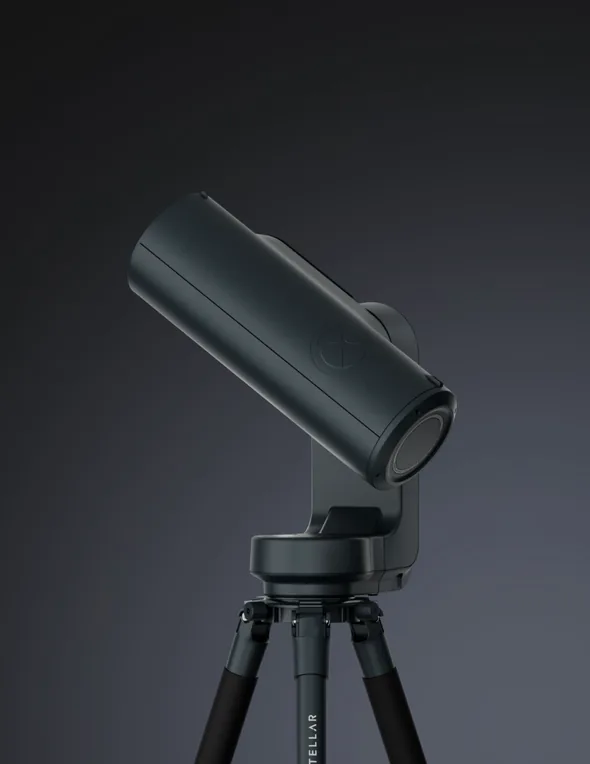
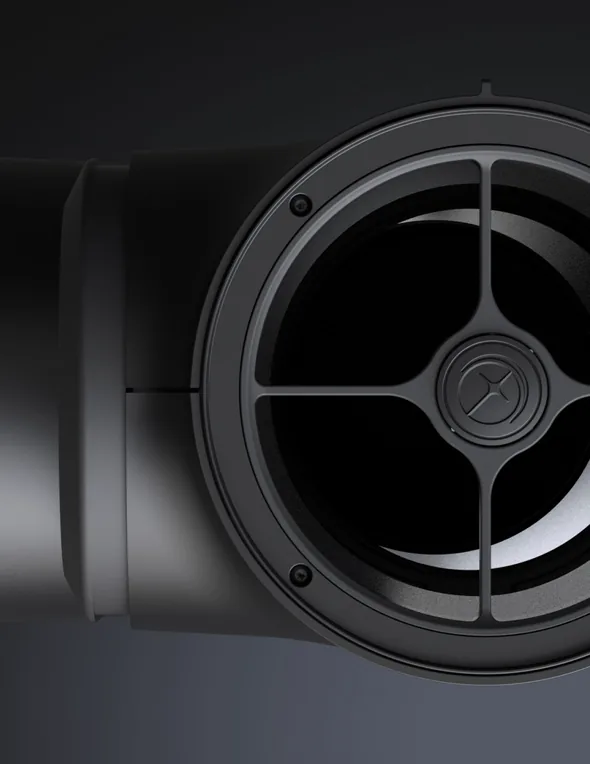
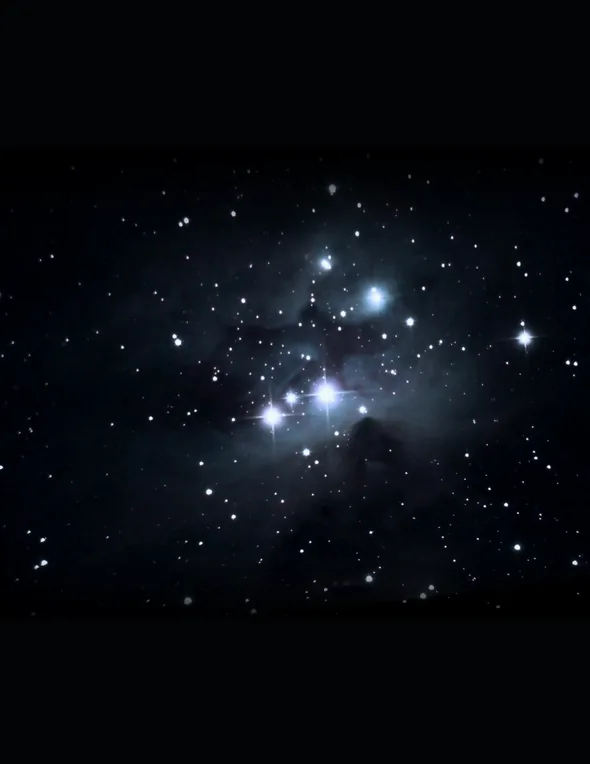
The 85 mm (3.3 in) aperture, 320 mm focal length and 1.45 µm pixel size give the Odyssey a specification-led emphasis on detail, while its field of view is 33.6 x 45 arcminutes according to the maker. Autofocus and software light pollution filtering are listed, but the comparison indicates that more tasks remain manual than for most of the other telescopes. The maker states a 4 kg telescope weight, a 2.5 kg tripod weight and 5 hours of battery life.
See the price at Unistellar£2,099, Price at Unistellar's UK shop, 23 October 2026
Field notes that mention it
Nearby in the sky: similar scopes
- DwarfLab Draco90 mm, 5.5 kg, from £1,349
- Unistellar Odyssey Pro85 mm, 4 kg, 0.75° × 0.56°, from £3,699
- Unistellar eQuinox 2114 mm, 7 kg, 0.76° × 0.57°, £2,299
- Vaonis Vespera III50 mm, 5 kg, 2.5° × 1.4°, £2,199