Unistellar eQuinox 2
Unistellar's app filtering, Newtonian optics and compact field
At a glance
Thin cloud5.2 out of 10
The eQuinox 2 pairs a 114 mm (4.5 in) aperture with a 6.2 MP image sensor and 64 GB of storage. Its stated 11-hour battery life is useful on the spec sheet, while its 7 kg telescope weight and lack of autofocus call for more effort from you.
Five scores, from 1 to 10
- Light graspaperture, against every scope listed here8.4
- Detailfocal length and pixel size6.5
- Field of viewhow much sky fits in one frame1.8
- Portabilitycarry weight, without the tripod3.7
- Easebattery, autofocus, dew heater, light pollution handling5.7
Mean score 5.2 out of 10
The sums behind these figures are set out on how scores work. With no figure from the maker, a row stays empty.
Unistellar eQuinox 2 specs compared
The 6.2 MP image sensor works with software noise and light pollution filtering in the Unistellar app, a feature aimed at imaging under a bright British town sky. For your garden, that filtering is relevant to nebula imaging, but it does not come with a stated gain in limiting magnitude.
The 114 mm (4.5 in) aperture gathers more light than most of the telescopes compared, according to the maker's stated aperture. As a Newtonian reflector, the eQuinox 2 has a 450 mm focal length and a focal ratio of f/4. That combination sets the optical scale for the camera rather than providing an electronic eyepiece: the maker specifies none.
The 2.9 µm pixel size pairs with the 450 mm focal length. The finer limit of optical resolving power and two-pixel sampling places its detail in the middle of the telescopes compared. The maker quotes a limiting magnitude of 18.2, a manufacturer figure rather than a promise about what your sky will show.
The 34.2 x 45.6 arcminute field of view frames a narrower patch of sky than most of the telescopes compared, according to the maker. Its longer side sets the field comparison, so your chosen target's apparent size matters when composing an image.
Field use and app controls
The alt-azimuth mount keeps the telescope's arrangement straightforward, while long exposures on an alt-azimuth mount can show field rotation. The Unistellar app runs on iOS and Android, and provides the stated software noise and light pollution filtering.
The 11-hour battery life is the maker's quoted figure. With no autofocus, focusing remains a manual task rather than an automatic adjustment. The maker also specifies no electronic eyepiece, so the listed arrangement is based on the integrated camera and app.
The 64 GB internal storage gives your observing session space for image files. The telescope weighs 7 kg, according to the maker, and the tripod adds 2 kg. The portability comparison uses the telescope weight with the tripod excluded, placing it heavier to carry out than most of the telescopes compared. If you take the tripod too, the combined quoted weight is 9 kg.
- Light grasp: More light gathering than most of the telescopes compared (aperture compared across the group).
- Detail: Middle of the telescopes compared (the finer limit of optical resolving power and two-pixel sampling).
- Field: Narrower than most of the telescopes compared (the longest side of the main camera's field).
- Portability: Heavier to carry out than most of the telescopes compared (telescope weight, tripod excluded).
- Ease: More to do by hand than most of the telescopes compared (battery life and the named hands-off features).
See the price at UnistellarUnistellar eQuinox 2, £2,299, Price at Unistellar's UK shop, 23 October 2026
Specifications
| Optical design | Reflector |
|---|---|
| Aperture | 114 mm (4.5 in) |
| Focal length | 450 mm |
| Focal ratio | f/4 |
| Sensor | 6.2 MP |
| Pixel size | 2.9 µm |
| Image size | not stated by the maker |
| Field of view | 0.76° × 0.57° |
| Limiting magnitude (maker's figure) | 18.2 |
| Mount | Alt-azimuth |
| Electronic eyepiece | No |
| Filters built in | not stated by the maker |
| Autofocus | No |
| Battery life (maker's figure) | 11 h |
| Weight | 7 kg |
| Storage | 64 GB |
| Dew heater | not stated by the maker |
| Weather rating | not stated by the maker |
| App | Unistellar app (iOS and Android) |
Source: the maker's own specification sheet. Where it says "not stated by the maker", the maker has not given that figure so far.
Versions
Price at Unistellar's UK shop, 23 October 2026. Each row leads to that version at the shop.
Strengths and limits
- The eQuinox 2 is a smart telescope with a 114 mm (4.5 in) aperture, 450 mm focal length and f/4 focal ratio.
- The maker lists a 6.2 MP image sensor with 2.9 µm pixels and a 34.2 x 45.6 arcminute field of view.
- According to the maker, battery life is 11 hours; internal storage is 64 GB and the app is available for iOS and Android.
- According to the maker, the telescope weighs 7 kg and the tripod weighs 2 kg, making the carry heavier than most telescopes.
- The maker lists no autofocus, and the alt-azimuth mount frames a narrower patch of sky than most telescopes.
Who it suits, and which skies
For town skiesFor faint galaxies
A good match if you want a smart telescope with a 114 mm (4.5 in) aperture, 64 GB of storage or software light pollution filtering in the app.
Less so if you need autofocus or want a lighter telescope and tripod to carry.
Bundles and prices for each version sit in the table above; the current line-up is on the shop's own page.
Questions about the Unistellar eQuinox 2
- How much does the eQuinox 2 weigh when you carry it out?
- According to the maker, the telescope weighs 7 kg and the tripod weighs 2 kg. The telescope weight is heavier to carry than most of the telescopes.
- What does setting it up involve?
- The maker lists an alt-azimuth mount, an app for iOS and Android, and no autofocus. Its specifications give a 7 kg telescope weight, excluding the 2 kg tripod.
- Is it suited to a city sky?
- The maker lists software noise and light pollution filtering in the app, alongside a limiting magnitude of 18.2 according to the maker. The specifications give a 34.2 x 45.6 arcminute field of view according to the maker.
- What do the battery figures mean for a long night?
- According to the maker, battery life is 11 hours. Internal storage is 64 GB, according to the maker.
- How much sky does the camera frame?
- According to the maker, the field of view is 34.2 x 45.6 arcminutes. The comparison describes it as a narrower patch of sky than most of the telescopes compared.
Photos
Last light
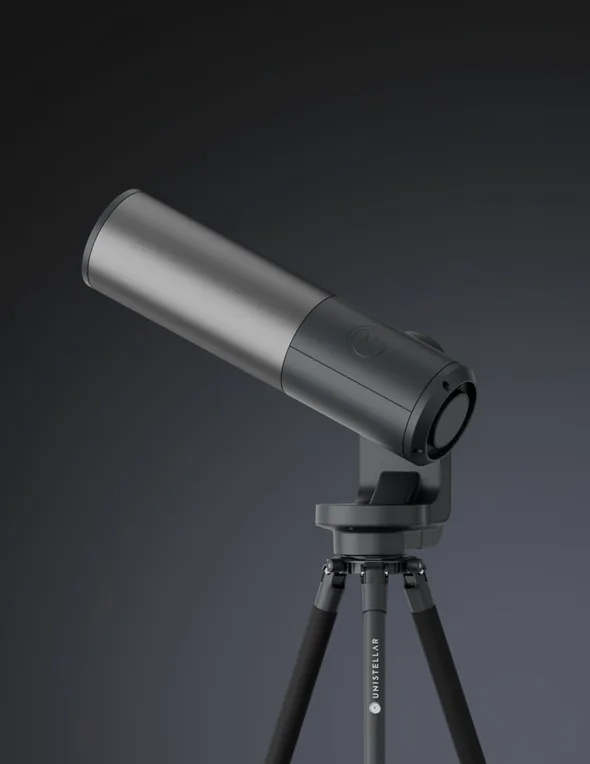
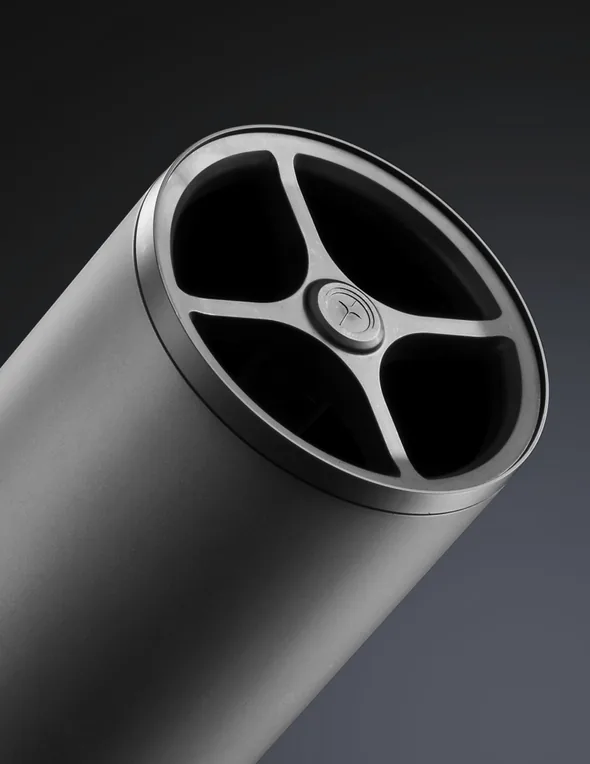
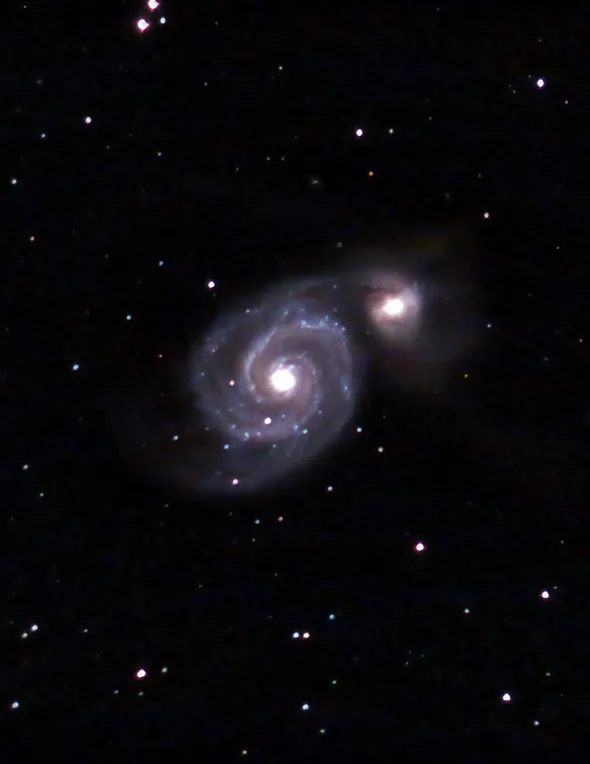
According to the maker, the 114 mm (4.5 in) aperture gathers more light than most telescopes in that comparison, while the field of view is narrower than most. The maker lists 11 hours of battery life, software noise and light pollution filtering in the app, and no autofocus. The 7 kg telescope and 2 kg tripod make portability a clear trade-off.
See the price at Unistellar£2,299, Price at Unistellar's UK shop, 23 October 2026
Field notes that mention it
Nearby in the sky: similar scopes
- Unistellar Odyssey85 mm, 4 kg, 0.75° × 0.56°, £2,099
- Unistellar eVscope 2114 mm, 7 kg, 0.76° × 0.57°, £4,199
- DwarfLab Draco90 mm, 5.5 kg, from £1,349
- Unistellar Odyssey Pro85 mm, 4 kg, 0.75° × 0.56°, from £3,699