Unistellar Odyssey Pro
A reflector smart telescope with app-based light pollution filtering from Unistellar
At a glance
Good seeing5.9 out of 10
The Unistellar Odyssey Pro pairs an 85 mm aperture with autofocus, an electronic eyepiece and app-based light pollution filtering.
Five scores, from 1 to 10
- Light graspaperture, against every scope listed here7
- Detailfocal length and pixel size8.1
- Field of viewhow much sky fits in one frame1.8
- Portabilitycarry weight, without the tripod5.3
- Easebattery, autofocus, dew heater, light pollution handling7.3
Mean score 5.9 out of 10
The sums behind these figures are set out on how scores work. With no figure from the maker, a row stays empty.
Unistellar Odyssey Pro specifications
A 1.45 µm pixel size is the key sensor figure for this smart telescope, although no sensor model or megapixel count is included in its specifications. The 320 mm focal length and f/3.9 focal ratio describe the reflector's optical setup, while autofocus is included.
Optics and field
The 85 mm (3.3 in) aperture gathers more light than most of the telescopes compared, placing its light grasp ahead of most in this group.
Its 320 mm focal length works with 1.45 µm pixels to put finer detail within reach than most of the telescopes compared. This comparison uses the tighter limit between the optics' resolving power and the sampling across two pixels, rather than treating focal length alone as a measure of detail.
The maker quotes a limiting magnitude of 17.2. This is the manufacturer's stated figure for the faintness limit, not a promise of what your local sky will allow.
The field of view is 33.6 x 45 arcminutes according to the maker. Its longest side frames a narrower patch of sky than most of the telescopes compared, a consideration when choosing targets that need more room in the frame.
Mount, app and observing features
An alt-azimuth mount carries the reflector, with control through the Unistellar app for iOS and Android. The electronic eyepiece is present, and autofocus is included, so focusing is handled by the telescope rather than left entirely to manual adjustment.
Software noise and light pollution filtering in the app addresses light pollution during imaging. For your garden under bright street lighting, that processing is relevant to emission-nebula imaging, but it does not remove the effect of the surrounding sky.
The telescope has 64 GB of internal storage. That gives you space on the instrument for saved material, while the app provides the stated control route from a compatible phone or tablet.
Carrying and power
The maker quotes a telescope weight of 4 kg, excluding the 2.5 kg tripod. The carried telescope weight sits in the middle of the telescopes compared, using the telescope alone for this portability comparison. The separate tripod adds to what you need to carry from indoors to your garden.
Battery life is 5 hours according to the maker. That figure places the Odyssey Pro's battery life alongside its autofocus and app-based filtering for an ease comparison; the combined assessment leaves more to do by hand than most of the telescopes compared.
Comparison summary
- Light grasp: ahead of most of the telescopes compared (based on aperture).
- Detail: finer than most of the telescopes compared (based on the tighter of optical resolution and two-pixel sampling).
- Field: narrower than most of the telescopes compared (based on the longest side of the main camera's field).
- Portability: in the middle of the telescopes compared (based on telescope weight, with the tripod excluded).
- Ease: leaves more to do by hand than most of the telescopes compared (based on battery life and the stated hands-off features).
See the price at UnistellarUnistellar Odyssey Pro, from £3,699, Price at Unistellar's UK shop, 23 October 2026
Specifications
| Optical design | Reflector |
|---|---|
| Aperture | 85 mm (3.3 in) |
| Focal length | 320 mm |
| Focal ratio | f/3.9 |
| Sensor | not stated by the maker |
| Pixel size | 1.45 µm |
| Image size | not stated by the maker |
| Field of view | 0.75° × 0.56° |
| Limiting magnitude (maker's figure) | 17.2 |
| Mount | Alt-azimuth |
| Electronic eyepiece | Yes |
| Filters built in | not stated by the maker |
| Autofocus | Yes |
| Battery life (maker's figure) | 5 h |
| Weight | 4 kg |
| Storage | 64 GB |
| Dew heater | not stated by the maker |
| Weather rating | not stated by the maker |
| App | Unistellar app (iOS and Android) |
Source: the maker's own specification sheet. Where it says "not stated by the maker", the maker has not given that figure so far.
Versions: 2 to choose from
Price at Unistellar's UK shop, 23 October 2026. Each row leads to that version at the shop.
Strengths and limits
- The 85 mm (3.3 in) aperture gathers more light than most telescopes in this comparison.
- The 320 mm focal length and 1.45 µm pixel size give finer detail limits than most of the compared telescopes.
- Autofocus, an electronic eyepiece, 64 GB of storage and an app for iOS and Android are listed.
- The 33.6 x 45 arcminute field of view frames a narrower patch of sky than most telescopes in this comparison.
- The maker states a battery life of 5 hours; the listed weight is 4 kg for the telescope, plus a 2.5 kg tripod.
Who it suits, and which skies
For first nightsFor town skies
A good match if you want autofocus, app-based light pollution filtering or an electronic eyepiece.
Less so if you want a wider field of view or a lighter complete carry with the tripod.
Bundles and prices for each version sit in the table above; the current line-up is on the shop's own page.
Questions about the Unistellar Odyssey Pro
- How much does the Odyssey Pro weigh when carried out?
- The maker gives the telescope's weight as 4 kg and the tripod's as 2.5 kg.
- What helps with setup and focusing?
- Autofocus is listed, and the Unistellar app is available for iOS and Android.
- Is it suited to a city sky?
- The app includes software noise and light pollution filtering.
- How long does the battery last during a session?
- The maker states a battery life of 5 hours.
- How wide a patch of sky does it frame?
- The maker gives a field of view of 33.6 x 45 arcminutes.
Photos
Last light
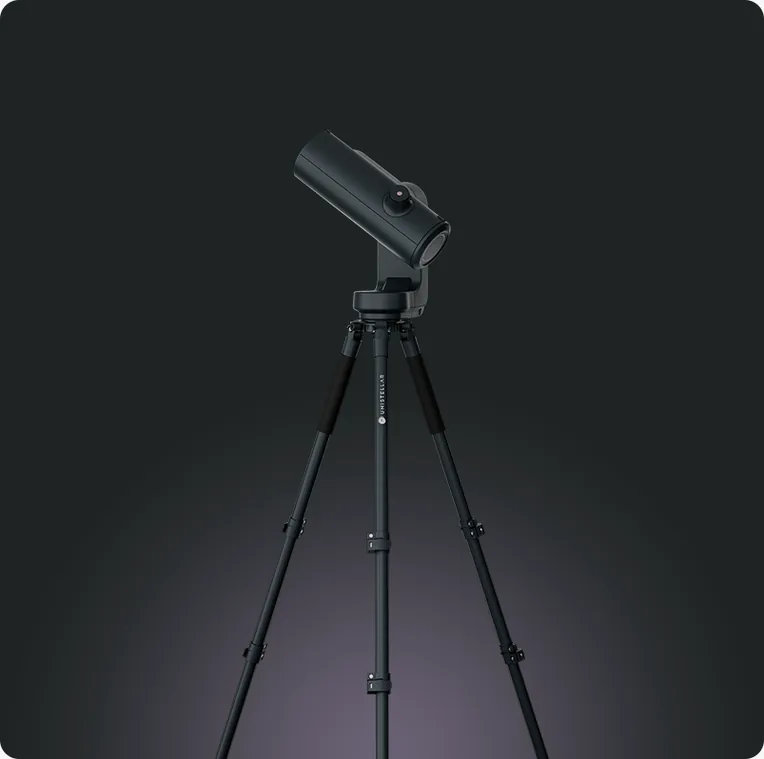
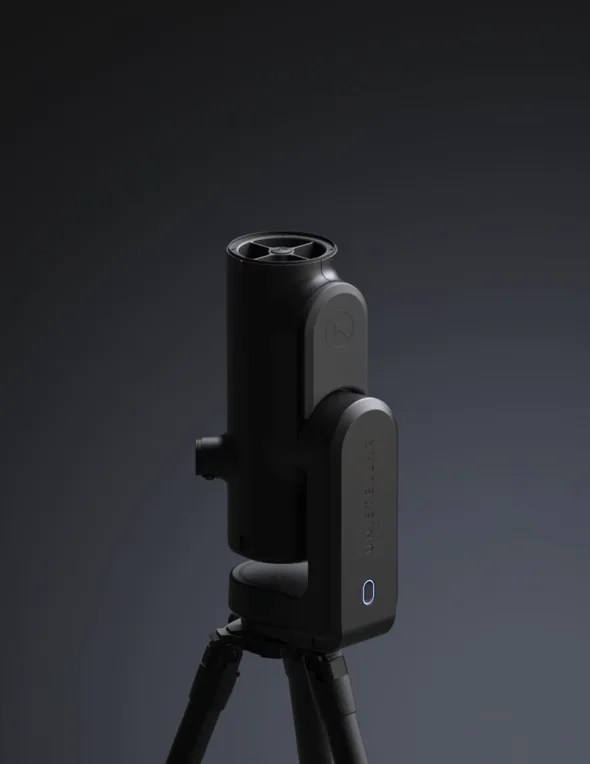
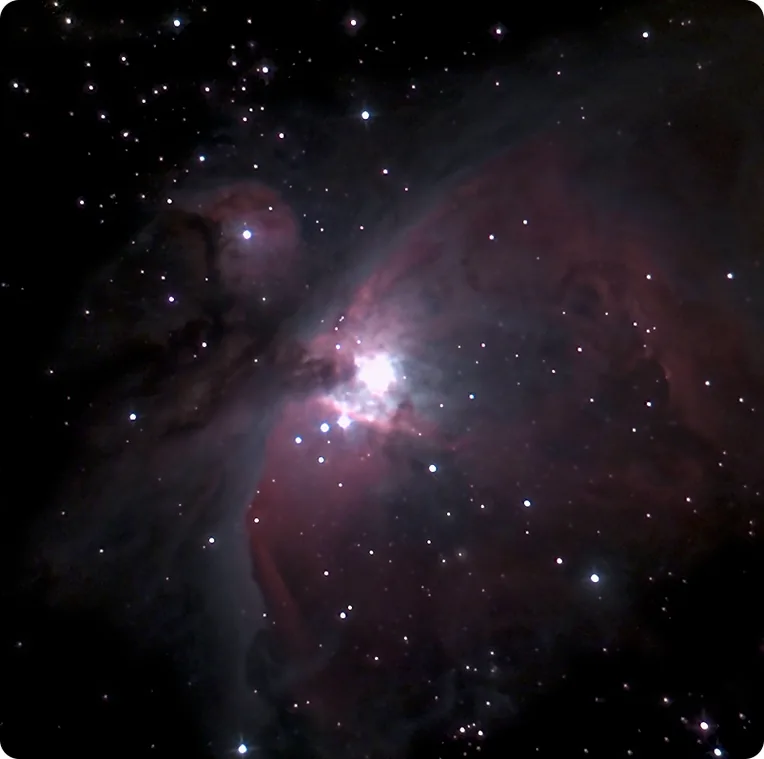
The 85 mm aperture and 320 mm focal length are the key figures, alongside 1.45 µm pixels and a maker-quoted limiting magnitude of 17.2. Its 33.6 x 45 arcminute field of view is narrower than most in this comparison. The maker states a 5-hour battery life, while the telescope weighs 4 kg and its tripod 2.5 kg.
See the price at Unistellarfrom £3,699, Price at Unistellar's UK shop, 23 October 2026
Field notes that mention it
Nearby in the sky: similar scopes
- Unistellar Odyssey85 mm, 4 kg, 0.75° × 0.56°, £2,099
- Unistellar eVscope 2114 mm, 7 kg, 0.76° × 0.57°, £4,199
- DwarfLab Draco90 mm, 5.5 kg, from £1,349
- Unistellar eQuinox 2114 mm, 7 kg, 0.76° × 0.57°, £2,299